How a 3PL Uses RFID Smart Lockers to Manage Shared Warehouse Scanners
A 24/7 automotive logistics operation used RFID smart lockers to manage shared scanners, reduce shift-change queues and achieve reported payback in under three months.
Company
Global 3PL
Industry
Automotive Logistics
Region
UK
Product
RFID Tags for Handheld Devices
System
RFID Smart Lockers
Operating in 20 countries, this global logistics company specializes in Service Parts Logistics, efficiently managing spare parts and components for leading automotive brands. With a steadfast commitment to 100% order accuracy, the company has built a reputation as a trusted partner in the competitive automotive supply chain.
To address inefficiencies in managing warehouse scanners and mobile devices, the company leveraged Xerafy’s asset tracking expertise to implement advanced RFID automation. This collaboration transformed operations at their UK warehouse, enhancing efficiency, reducing costs, and ensuring seamless workflows.
Challenge: Keeping Shared Scanners Available Across 24/7 Shifts
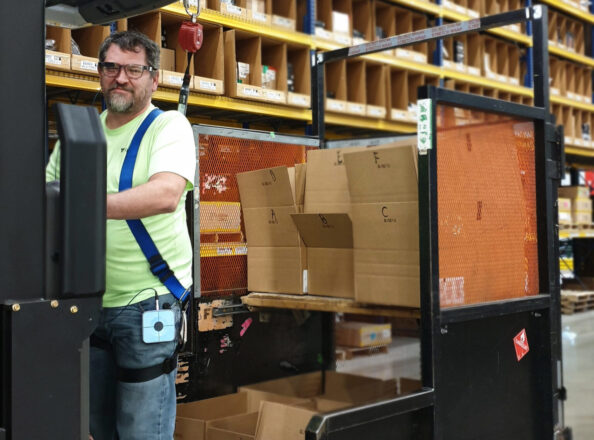
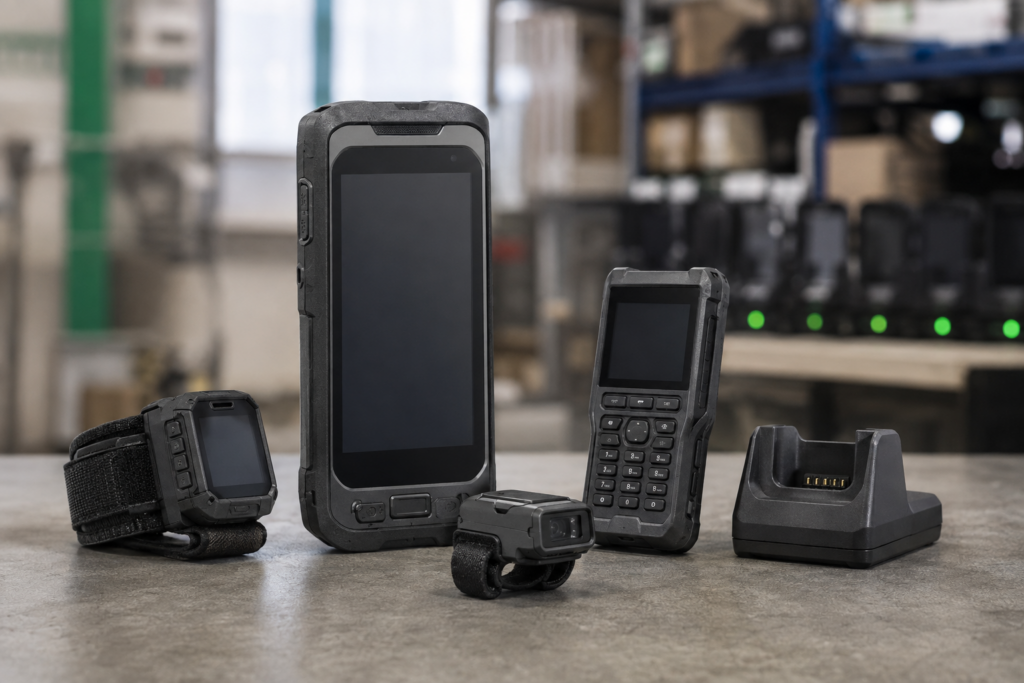
The company operated a 1.5-million-square-foot automotive logistics warehouse in Leicestershire, United Kingdom. Five main teams relied on shared handheld scanners to support continuous, 24/7 operations.
The 1.5-million-square-foot automotive logistics site operated continuously across successive shifts
The handheld scanners were frequently damaged, lost, misplaced or accidentally packed with outbound parts. Managers spent significant time locating devices and making them available for the next shift, creating delays in an operation that depended on continuous scanner availability.
In the three months before the smart-locker installation, the operation reportedly spent £50,000 replacing scanners valued at approximately £2,000 each.
The company needed a controlled device-management workflow that could:
Store shared scanners securely between shifts
Associate each issued scanner with an individual employee
Accelerate issue and return during shift handovers
Maintain more consistent device availability
Identify damaged or unreturned equipment
Solution: RFID Smart Lockers for Scanner Issue and Return
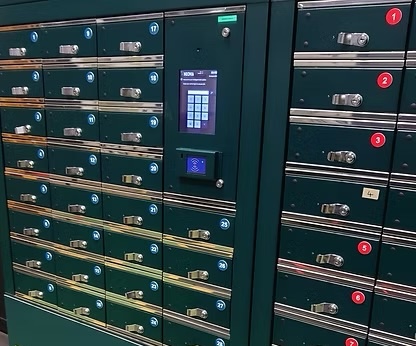
The company worked with iLockerz to install ten smart lockers banks across the site. Up to ten employees could issue or return scanners simultaneously, helping reduce queues during shift handovers.
Employees presented their existing ID badge to the locker system. The system associated each transaction with the employee and allocated the scanner with the least prior use, helping distribute usage more evenly across the device fleet.
Ten smart-locker banks provided 280 controlled positions for shared scanners
The locker system used the tag identity to verify when the device was issued or returned and record which employee was responsible for it. Employees could also report a faulty scanner through the locker interface so that it could be removed from service.
Selecting RFID Tags for Different Scanner Designs
Warehouse scanners, RFID readers and mobile computers can have different housing materials, geometries, available marking areas, charging contacts and handling conditions. The appropriate RFID tag therefore depends on the representative device and intended locker or inventory workflow.
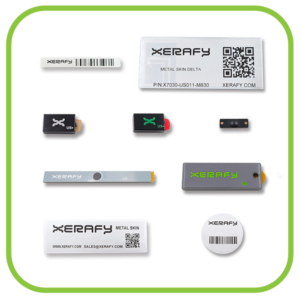
Current Xerafy options include:
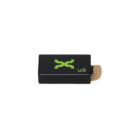
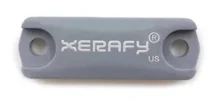
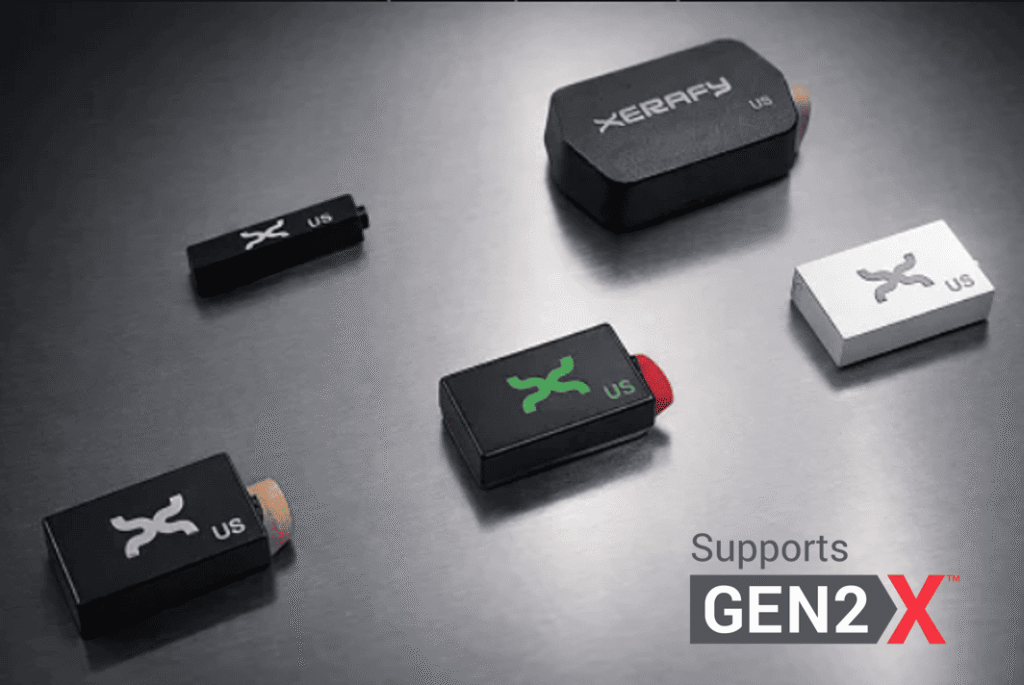
PICO On and PICO Off compact rugged tags for devices requiring a small, rugged format
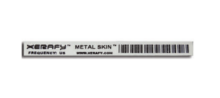
Metal Skin® labels where a thin, printable on-metal label fits the available surface
Slim TRAK for applications requiring a thin durable tag across suitable metal and plastic surfaces
MICRO Power where a compact high-temp tag fits the device geometry and placement area
PICO On and PICO Off
METAL SKIN Titanium
Slim TRAK
MICRO Power
These are starting points rather than a record of the exact tag used in this deployment. Candidate tags should be tested on the actual devices at normal locker density, using the intended reader configuration and issue-and-return workflow. For new device designs, embedded RFID identification can be qualified within the product’s manufacturing process, with retention and read performance tested inside the enclosure.
Results: Five-Second Transactions and Payback in Under Three Months
According to the published deployment account, employees could issue or return a scanner in approximately five seconds, reducing queues during shift handovers. The system also improved secure storage, reduced scanner loss and damage, and enabled faulty devices to be reported through the locker interface.
The complete solution cost less than £200,000 and reportedly achieved payback in under three months based on scanner costs alone. The 3PL also reported a double-digit improvement in operational efficiency and productivity.
What to Validate Before Deploying RFID Smart Lockers
RFID performance should be validated around the actual device fleet and storage workflow before rollout.
Confirm tag placement does not obstruct controls, ports, vents, charging contacts or existing identification
Test read performance with devices stored together at normal locker density
Configure reader power and read-zone boundaries to distinguish confirmed issue and return events from unintended nearby reads
Define workflows for missing, damaged, faulty and unreturned devices
Confirm how RFID identities, employee badges and device records will be associated
An open-area tag test does not confirm performance inside the final locker or charging environment.
Planning an RFID smart-locker or controlled-storage workflow for scanners, RFID readers or mobile computers? Share the device models, housing materials, available placement areas and intended locker or charging setup. Xerafy can recommend candidate tags for representative-device testing before rollout.
Xerafy is a pioneer in Industrial RFID, bringing to market several innovations that enable advanced identification and automation capabilities in Inventory.
In addition to a complete range of field-proven RFID tags available off-the-shelf, Xerafy offers Custom RFID Tags services, covering everything from a personalization service bureau to custom-design engineering capabilities.