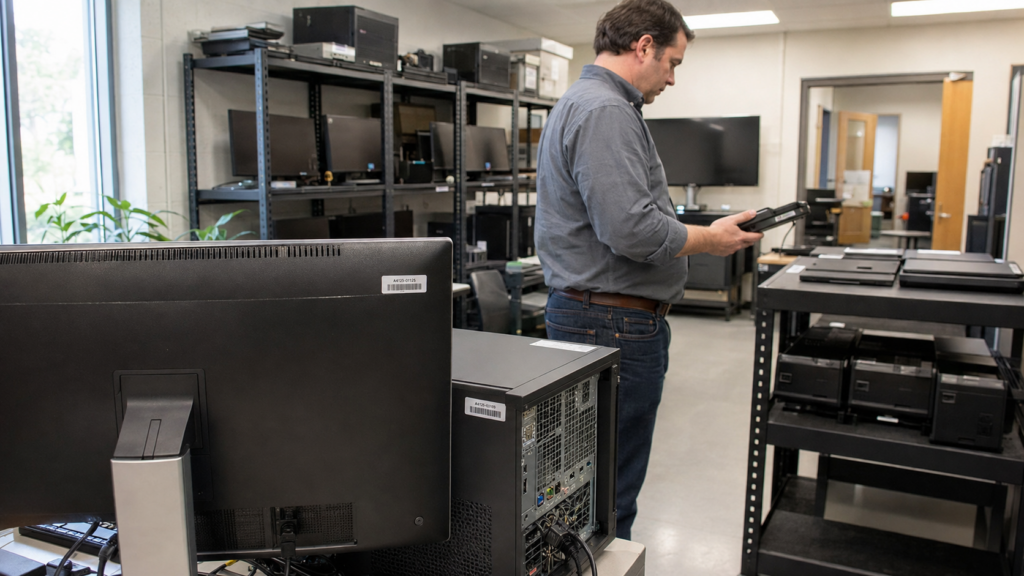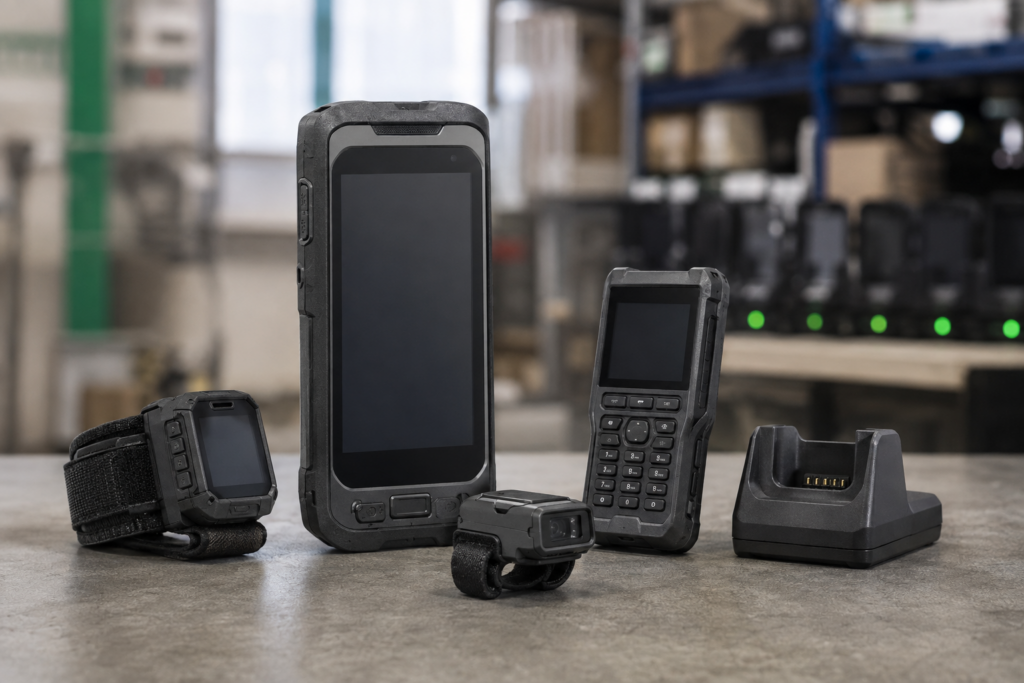
An enterprise mobile computing leader needed an RFID component inside its handheld mobile computer. The available space was 4 mm wide, next to internal metal. The enclosure had to hold the component mechanically, without pressure-sensitive adhesive.
Xerafy worked with the device program and its electronics design and manufacturing partner to meet these constraints. The team had to balance component thickness with read performance, then qualify the design for assembly and production.
Passive RAIN RFID allows identification even when the mobile computer is powered off. The device owner or operator defines how those reads support fleet management through its software and operating procedures.
Prepared by Xerafy’s engineering team, this case study documents the actual application and development process, from component design and testing through production qualification. Customer and partner names and sensitive design details have been omitted to protect confidentiality.
Why Design RAIN RFID as a Device Component?
The device program required the RFID component to be mechanically retained inside the enclosure without pressure-sensitive adhesive. That made the enclosure materials and integration envelope part of the RF design.
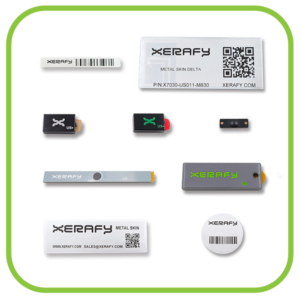
Xerafy used its Metal Skin® custom platform to establish the starting envelope, but the final combination of adhesive-free retention, thickness, installed read range, and production artwork required a custom construction.
The embedded component also had to operate inside a powered device with Wi-Fi, cellular, GPS, and other internal radio systems. Xerafy owned the passive RFID component and its on-device RF qualification. The device company and its engineering partners retained responsibility for whole-device radio coexistence and compliance testing.
Engineering the RFID Component for the Actual Device
The design targeted approximately 1 m of read range with an external handheld UHF reader.
Xerafy estimated that a profile no thicker than 0.8 mm would provide roughly 70 cm. Engineering work indicated that at least 1 mm was needed to approach the target. The program accepted the thicker construction, and preliminary installed-device tests reported approximately 1 m.
The team selected the Impinj M830 RAIN RFID chip in an adhesive-free on-metal construction. Qualification used the actual mobile computer, where surrounding metal and enclosure materials affected performance. Read results also depended on the test reader’s antenna characteristics.
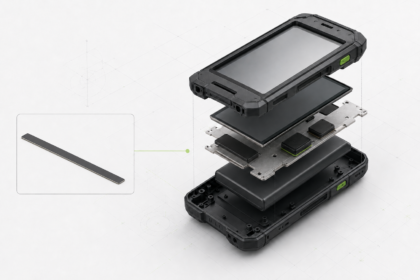
The surrounding materials changed the label’s response across regional operating frequencies. Tests showed that rotating the label 180 degrees changed that response, helping the team meet the required regional configurations. Assembly instructions therefore had to specify orientation.
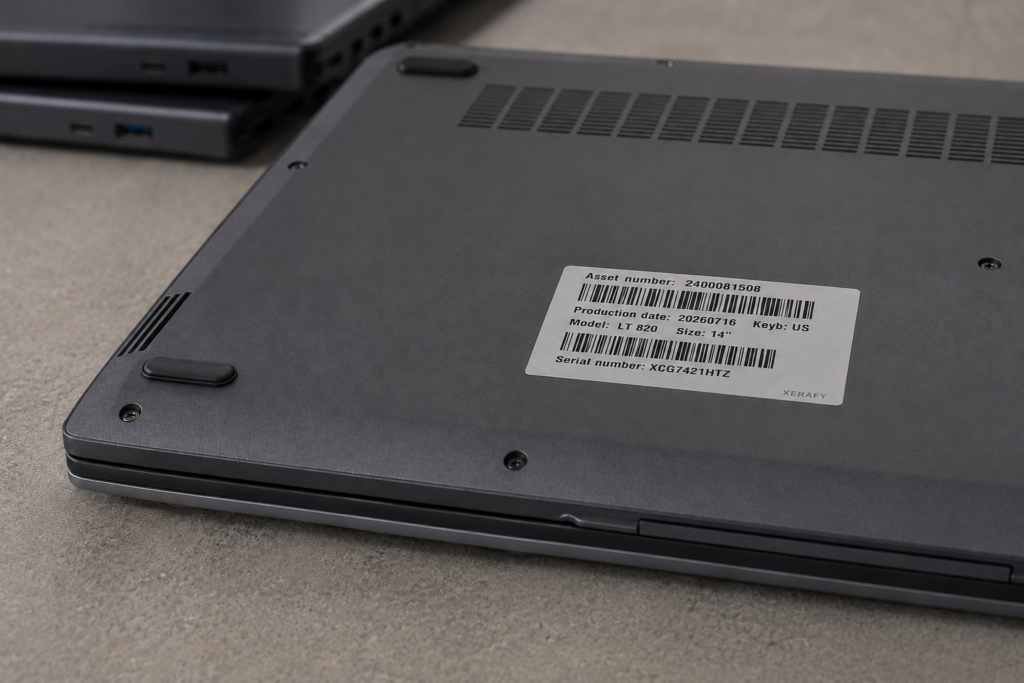
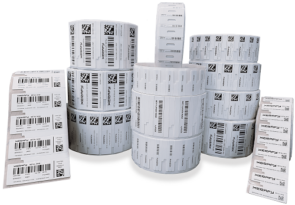
The label looked symmetrical, so visual inspection alone could not distinguish the required orientation. Asymmetric printed markings allowed cameras to verify it during assembly. Thickness inspection checked that the component still fit the available space.
From Product Decision to Mass Production
Xerafy’s label and RF engineers worked with the manufacturing partner’s mechanical engineering, purchasing, pilot-line, printing, camera-inspection, manufacturing-qualification, and production teams.
The development path deliberately increased commitment in stages:
- Feasibility: Custom samples established the installed-device read and fit envelope
- Pilot build: Production-line labels were supplied for assembly and verification in the mobile computer
- Trial production: Manufacturing, regional configuration, print, and inspection controls were qualified
- Production release: The approved construction and process moved into mass production
- Continued supply: Later manufacturing records confirmed repeat production with consistency-test data
The component’s production configuration separated a standard no-print base construction from controlled customer artwork and regional variants.
Outcome: A Production-Qualified Embedded Component
Manufacturing qualification established a repeatable component specification spanning the RFID construction, internal integration interface, orientation, regional configurations, print control, camera inspection, and assembly verification. The approved embedded component then entered mass production and continued supply.
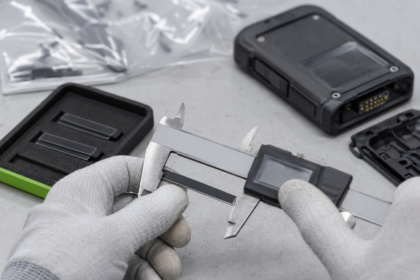
The central lesson is that designing RAIN RFID into a product is not an antenna-sizing exercise. When RFID becomes a device component, mechanical retention, material stack, orientation, artwork, camera inspection, and production tolerances become functional product requirements that must be qualified with the manufacturing process.
Engineering Takeaways
- Treat embedded RFID as a product component, not a finished-device add-on. Define the integration envelope, retention method, RF target, and ownership with the device program before the production design is fixed.
- Treat adhesive removal and thickness changes as an RF redesign, then qualify read range and orientation on the actual device. Open-air tests cannot reproduce nearby metal, enclosure materials, or internal radios.
- Design component production controls with the manufacturing partner. Orientation marks, artwork revision control, tolerances, regional variants, packaging, and inspection are part of the RFID specification.
Evaluate Metal Skin® for Embedded Device Component
Where RFID must become part of a product design, Xerafy can custom engineer an embedded component around the enclosure, available space, attachment method, regional frequency requirements, and manufacturing process.
Discuss an embedded or device-integrated RAIN RFID program with Xerafy engineers.
Xerafy develops field-proven RFID tags and labels for tracking assets in demanding industrial and enterprise environments. Its portfolio combines application-specific RFID engineering with products available for evaluation and deployment worldwide.
For requirements beyond standard products, Xerafy provides Custom RFID Tag services spanning printing, encoding, serialization and production configuration through to custom product engineering.