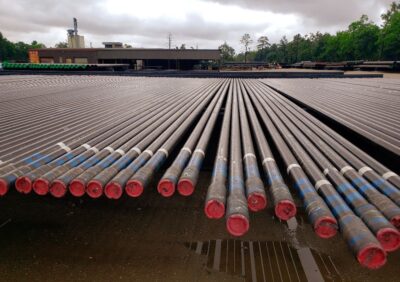
Following hydraulic fracturing, plug drill-out operations use rotating tubing strings to clear plugs and restore flow. The same joints may be reused across multiple wells on a pad, accumulating wear with each service cycle.
The manufacturer needed a reliable way to identify each joint throughout its lifecycle without weakening the steel or adding manual steps to rig operations. Embedded RFID was evaluated as a way to preserve this identity through repeated use.
A North American OCTG Manufacturer
The company manufactures tubing, casing, and connectors for upstream operators across the United States. Its products are used in mobile, high-frequency workover operations, including production, injection, and post-fracturing completion work.
Because tubular joints are reused across wells and service cycles, the manufacturer wanted to embed durable RFID into the steel to support joint-level traceability, reuse decisions, and lifecycle management in the field.
Tubular Wear and RFID Requirements
During plug drill-out, the tubing string undergoes sustained rotation, repeated contact with the wellbore, and abrasive wear under load. As this wear accumulates, the pipe wall gradually approaches its rejection limit.
The RFID solution therefore had to:
Survive repeated rotation, contact, and abrasion under load
Remain consistently readable throughout the tubing’s usable life
Preserve pipe integrity without introducing a new point of failure
Fit within the existing rig workflow without additional manual handling
These requirements ruled out exposed surface identification and required a protected, flush-mounted RFID solution within the steel.
Embedding XS Wedge RFID into OCTG Tubing
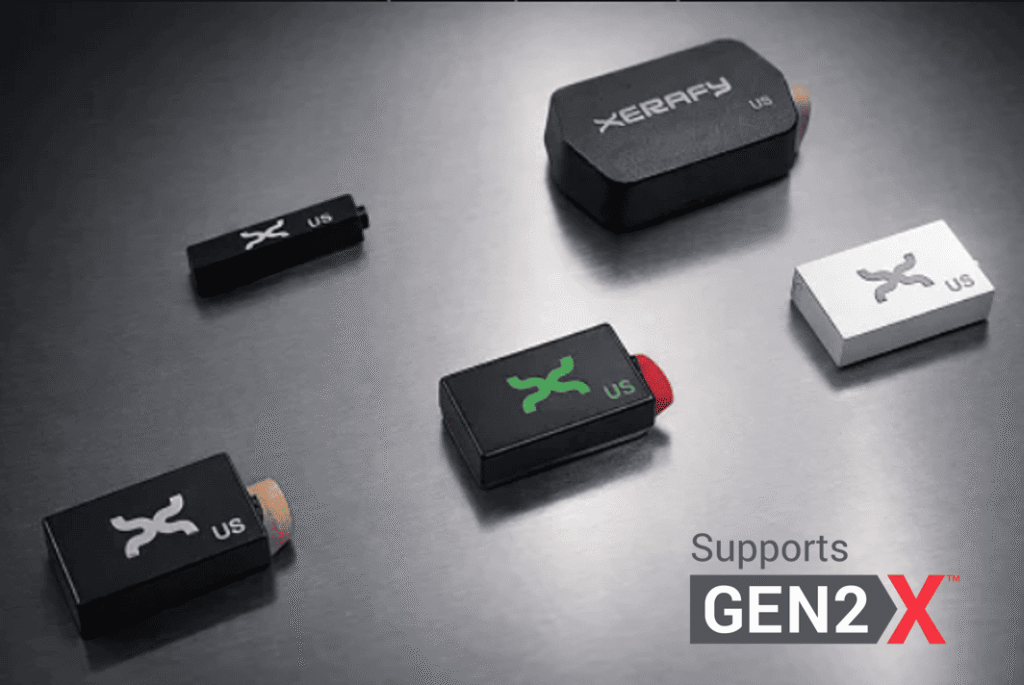
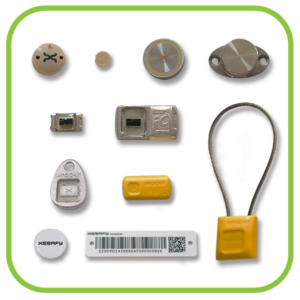
The Xerafy XS Wedge passive UHF RFID tag was selected for its compact, rugged design and ability to perform when embedded in metal.
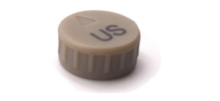
The Xerafy XS Wedge is an embedded and rugged design, with proven performance in metallic environments.
The installation was engineered to keep the tag protected within the steel throughout the tubing’s usable life. Tag placement and the surrounding structure were qualified to maintain reliable close-range identification without compromising pipe integrity.
RFID antennas installed at key transition points identified each joint as it was run into the well and again when it was retrieved. This enabled automated traceability without adding manual handling or data-entry steps to the rig workflow.
RFID Performance Beyond the Pipe’s Wear Limit
Testing confirmed that the embedded RFID tags remained functional after 180,000 wear cycles under load. By that point, tube-wall wear had already exceeded the pipe’s rejection limit, showing that the tags remained operational beyond the tubing’s usable life.
The deployment supported:
Automated joint-level identification across wells, pads, and service cycles
Lifecycle records for reuse, inventory, and quality-control decisions
Identification during both tubing run-in and retrieval
Traceability without additional handling or manual data entry
The results demonstrate that a properly engineered embedded RFID installation can preserve tubular identity through repeated well-completion operations until the pipe is retired.
Xerafy is a pioneer in Oil & Gas RFID, bringing to market several innovations that enable advanced industrial identification and automation capabilities.
In addition to a complete range of field-proven RFID tags available off-the-shelf, Xerafy offers Custom RFID Tags services, covering everything from a personalization service bureau to custom-design engineering capabilities.