Email Your Representative
Rugged RFID tags, labels, and custom formats for tracking parts, carriers, molds, fixtures, tools, and production assets through demanding manufacturing processes
Xerafy helps manufacturers identify WIP, parts, components, molds, dies, fixtures, skids, racks, load bars, tools, and production equipment across factory-floor workflows where heat, chemicals, metal, pressure, washdown, repeated handling, and automation read points can all affect performance.
Manufacturing RFID projects start with the asset, the process, and the environment. A tag used on a warehouse bin does not face the same constraints as a tag mounted on a paint-shop skid, e-coat rack, mold, fixture, load bar, or part carrier moving through production.
RFID can replace manual paperwork, barcode scans, and spreadsheet-based tracking with automated identification at key production steps. The right solution may be a rugged on-metal tag, a high-temperature tag, a printable RFID label, an embeddable tag, or a custom-engineered format qualified for a specific manufacturing process.
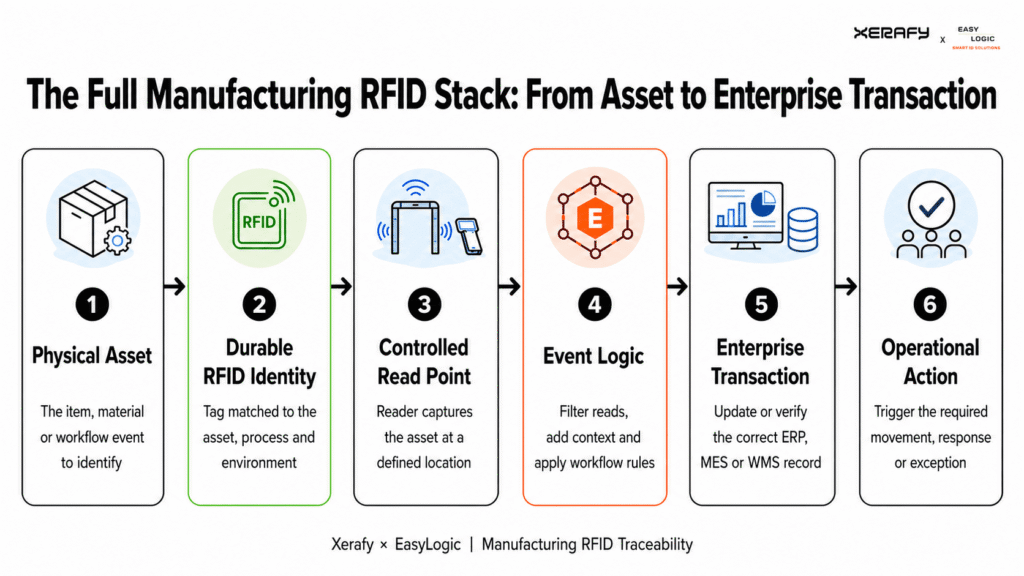
Reliable production tracking depends on more than tag durability. The tag, mounting method, read point, process exposure, encoding logic, and data handoff to MES, ERP, quality, maintenance, or traceability systems all need to work together.

RFID can be used at process entry, process exit, inspection, rework, buffer storage, transfer points, and factory automation read points to update production status without relying on manual scans or paperwork. Automated reads help increase data capture speed and reduce missed scans, duplicate entries, and manual input errors.
In a manufacturing workflow, the RFID tag may be attached to the part, the carrier, the tray, the skid, the load bar, or the traveler. The right choice depends on whether the identifier needs to stay with the product, survive the process, or circulate with a reusable production asset.
WIP tracking is most effective when the read points match the production logic: station reads for process confirmation, gate or portal reads for movement, handheld reads for exceptions, and fixed reads for automated handling or closed-loop carrier flows.
Captured RFID events can feed MES, ERP, WMS, quality, maintenance, or traceability systems with process status, asset identity, location, timestamp, and workflow history.
Typical Xerafy fit:
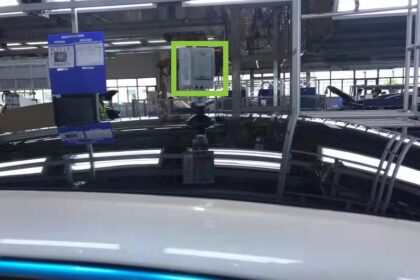
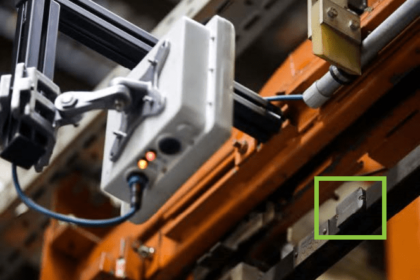
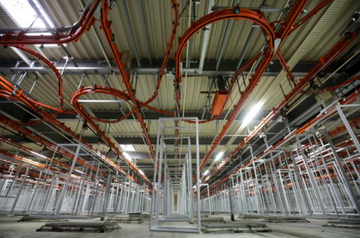
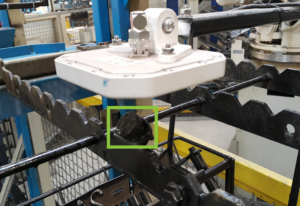
Xerafy supports RFID identification for skids, racks, load bars, carriers, and other production assets moving through industrial paint shop workflows. The application needs to account for the full process path: surface pretreatment, chemical baths, coating, curing, oven exposure, cleaning, and return cycles.
Tag selection depends on peak temperature, exposure time, chemical contact, mounting position, carrier material, read point location, and contamination risk. In paint shop applications, the mounting method is often as important as the tag itself because the tag must stay attached without interfering with coating, cleaning, or carrier movement.
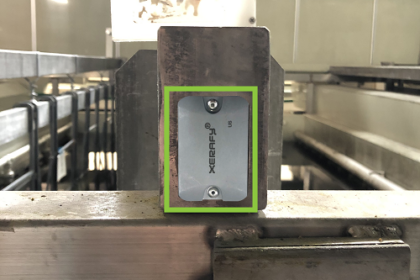
Xerafy offers rugged RFID tags and mounting options for high-resistance industrial tracking systems, including paint shop, e-coat, KTL, powder coating, and other harsh manufacturing processes.
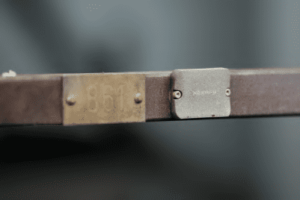
Typical Xerafy fit: MICRO Paint Shop is the go-to tagging solution for skids, load bars, racks, and carriers moving through dip tanks, cataphoresis, e-coat / KTL, powder coating, high-temperature drying, cleaning, and repeated paint-shop cycles.

In these environments, temperature rating alone is not enough to qualify an RFID tag. The application also needs to account for exposure time, thermal cycling, pressure, moisture, chemicals, cleaning, mounting location, asset material, and whether the tag must survive repeated cycles or only a specific production stage.
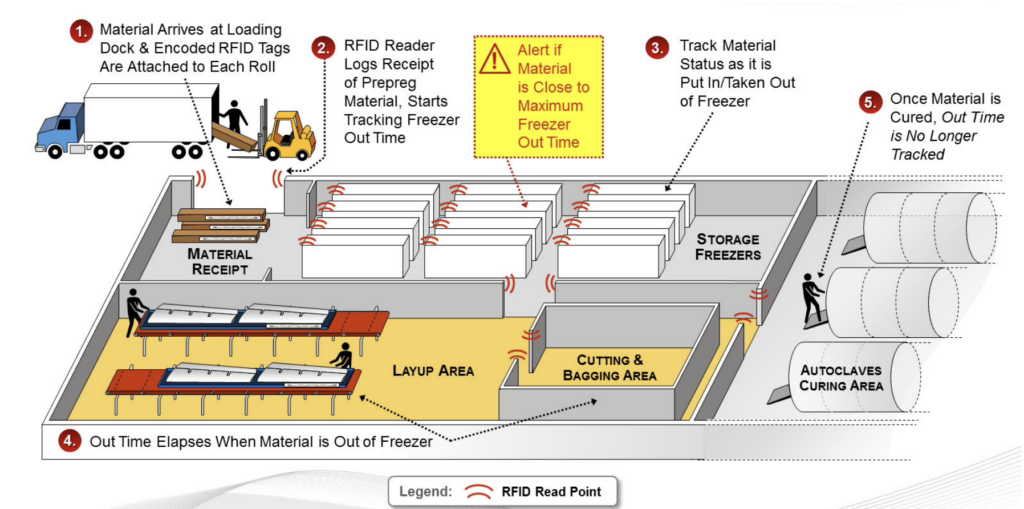
Xerafy high-temp RFID tags are designed for demanding industrial processes such as autoclaves, ovens, curing systems, extrusion equipment, and other harsh manufacturing environments where conventional labels or standard RFID tags may fail.
The right tag and mounting method should be validated against the real process conditions: peak temperature, duration, cooling cycle, pressure, cleaning regimen, read distance, tag orientation, and mechanical protection.
For extreme processes beyond the practical limits of reusable RFID tags, a removable, replaceable, shielded, or process-specific identification method may be the better design.
Typical Xerafy fit:

RFID production tracking can give each tool a unique identity across its lifecycle: storage, issue, setup, production use, cleaning, maintenance, repair, inspection, and return. The goal is not only to locate the asset, but to connect the physical tool with its status, maintenance history, production records, and readiness for use.
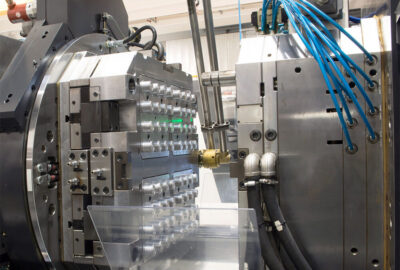
Tooling applications often require rugged on-metal RFID tagging because molds and dies are usually metallic, exposed to impact, cleaning, heat, abrasion, limited mounting space, and long service life. Tag placement and mounting method need to be selected so the tag remains readable without interfering with tool handling, machine setup, or the production process.
In tire production, for example, a single product family can involve dozens of molds. Mold tracking supports operational efficiency, maintenance planning, cleaning schedules, and protection of critical assets that may stay in service for decades.
Metal foundries, molding operations, stamping lines, cutting processes, and other manufacturing workflows face similar requirements: keep each mold, die, fixture, or tool identifiable, available, maintained, and traceable throughout the production lifecycle.
Typical Xerafy fit:

OEMs and suppliers can integrate RFID into plastic, metal, composite, or application-specific components at point of manufacture. The tag may be injection-molded, embedded, overmolded, inserted, bonded, or mechanically integrated depending on the material, process, and required read performance.
Embedded RFID projects need early validation because the surrounding material, tag orientation, molding process, pressure, heat, shielding, and final mounting location can all affect RF behavior. The right design depends on where the tag will be read, how much memory is required, whether the identifier needs to survive production or field service, and how the data connects to manufacturing, quality, maintenance, or lifecycle systems.
Xerafy supports embeddable RFID with ready-to-use and customizable tags for metal, plastic, and demanding industrial applications, including form-factor, chip, memory, material, and integration requirements.
Typical Xerafy fit: PICO In for RFID embedded into metal, ABS, PE, PC, and other materials where the identifier needs to be integrated into the part, component, consumable, or OEM system during manufacturing.
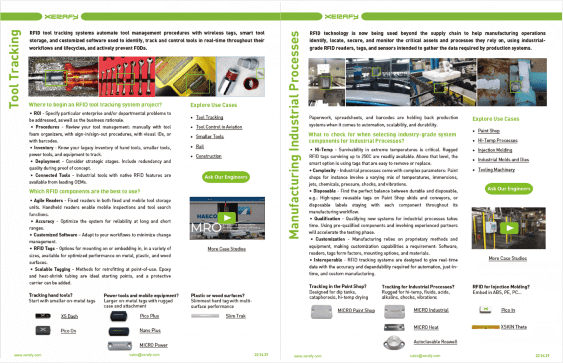
Manufacturing RFID projects are validated through the process: what is being tracked, where it is read, what the tag must survive, and how the data connects to production systems. These examples show RFID used for WIP visibility, mold management, quality tracking, high-temperature processes, and manufacturing system integration.
Temperature is only one part of the qualification. Manufacturing RFID tags may need to withstand heat, chemicals, immersion, pressure, washdown, abrasion, impact, curing, cleaning, and repeated handling.
Tag selection should consider peak temperature, exposure time, thermal cycling, chemical contact, mounting position, and whether the tag must survive one process stage or repeated production cycles.
Not every manufacturing asset should use the same tagging strategy. Reusable high-spec RFID tags are suited for skids, racks, load bars, molds, fixtures, tools, and carriers that circulate through repeated production cycles.
Disposable or lower-cost RFID labels may be better when the identifier needs to stay with an individual component, batch, work order, or traveler through part of the manufacturing workflow.
Manufacturing assets often include metal surfaces, curved parts, recessed areas, moving carriers, tight spaces, and harsh contact points. RFID performance depends on the surface, tag orientation, protection, and attachment method.
Depending on the process, the tag may need to be bonded, riveted, screwed, welded, embedded, tied, clipped, removed, replaced, or protected from direct process exposure.
RFID performance depends on where the tag is read, not only on the tag itself. Manufacturing projects may use fixed readers, portals, handhelds, conveyor reads, station reads, process-entry reads, process-exit reads, quality checkpoints, or maintenance points.
The tag, antenna position, read zone, asset orientation, process speed, and workflow logic need to be designed together.
Manufacturing RFID may support WIP visibility, traceability, quality records, maintenance history, production status, inventory movement, or automation triggers.
Tags can carry EPC data, serialization, user memory, or encoded references that connect to MES, ERP, WMS, quality, maintenance, automation, or traceability systems.
Manufacturing environments often rely on proprietary equipment, materials, handling methods, and process constraints. The RFID configuration may need to adapt to the process, not the other way around.
Xerafy supports manufacturing RFID projects with rugged tags, printable labels, encoding and serialization, marking, mounting options, application-specific materials, and custom-engineered form factors for demanding production environments.
Production tracking needs more data points, captured faster, with high accuracy and dependable read performance. Paperwork, spreadsheets, and barcode scans become limiting when the workflow requires automation, just-in-time production, custom manufacturing, or data capture without direct line of sight.
In manufacturing, RFID performance depends on the asset, tag location, read point, process speed, material, environment, and data handoff to MES, ERP, WMS, automation, maintenance, quality, or traceability systems.
Yes, but the tag must be selected and qualified against the actual process. Peak temperature alone is not enough. Exposure time, thermal cycling, pressure, moisture, chemicals, cleaning, mounting method, and read point location all affect performance.
Production environments start in the 55-110C range for cooking, pressurization, and sterilization. Temperatures up to 160C are common for industrial distillation and kilning, while chemicals are in the 90-200C range.
For processes beyond the practical limit of a reusable RFID tag, the better design may be a removable, replaceable, shielded, or process-specific tagging method.
Yes, but these applications require process qualification.
Automotive and industrial paint shops may involve pretreatment, alkaline or acidic baths, water immersion, jets, caustic chemicals, pressure, shocks, vibration, temperature cycling, e-coat / KTL, powder coating, oven drying, and cleaning cycles.
In these workflows, the mounting method is often as important as the tag because the tag must stay attached without interfering with coating, cleaning, carrier movement, or read performance.
RFID can track WIP, parts, components, molds, dies, fixtures, tools, skids, racks, load bars, trays, workpiece carriers, production equipment, and reusable process assets.
The identifier may stay with the product, attach to the carrier, or follow a work order or traveler depending on the manufacturing workflow.
RFID can provide asset identity, location, timestamp, process status, movement history, inspection events, maintenance records, routing information, and traceability data.
For automation, just-in-time, and custom manufacturing, the value is not only the data itself. The data must be captured accurately, repeatedly, and at the right process step, so the manufacturing system can act on it without relying on manual input.
Tags can carry EPC data, serialization, user memory, or encoded references that connect physical assets to MES, ERP, WMS, automation, maintenance, quality, or traceability systems.
Yes. RFID tags can store a unique identifier such as a product ID, asset number, serial number, batch number, work order, carrier ID, or encoded reference.
In most manufacturing projects, the RFID tag does not need to store the full production record. The tag usually carries a durable identifier, while the full data record stays in the system of record: ERP, WMS, MES, CMMS, quality, maintenance, or traceability software.
For example, a tag can be encoded to match an existing Data Matrix code, part number, asset number, bin ID, tray ID, load bar, carrier, paper router, or work order. When the tag is read, the RFID event can update the related production or asset record.
Some RFID chips also support User Memory for additional project-specific data. Whether to use EPC only, EPC plus User Memory, or a reference-based encoding model should be decided during project qualification.
RFID integrates by turning physical movements into digital events that existing systems can use.
A reader captures the tag ID at a defined read point: process entry, process exit, inspection, rework, buffer storage, maintenance, warehouse movement, or shipping. The RFID software or middleware then filters the read, applies business logic, and passes the event to ERP, WMS, MES, CMMS, quality, automation, or traceability systems.
In manufacturing, this can help connect a physical asset with its process status, location, timestamp, routing step, inspection history, maintenance record, or workflow event. RFID does not replace the enterprise system. It extends it with automated physical visibility where manual scans, paperwork, spreadsheets, or delayed updates are not reliable enough.
The right integration model depends on the workflow: WIP tracking, inventory visibility, closed-loop carrier tracking, tooling management, maintenance, quality documentation, or production traceability.
Manufacturing RFID projects may use fixed readers, handheld readers, antennas, portals, station reads, process-entry reads, process-exit reads, conveyor reads, machine-integrated read points, or mobile exception reads.
Fixed readers and antennas are typically used when the workflow needs automated identification at gates, stations, conveyors, portals, cells, storage areas, or process checkpoints. Handheld readers are useful for exceptions, maintenance, inspection, inventory checks, and locations where fixed infrastructure is not practical.
Reader selection should be based on the asset, tag position, read distance, read zone, process speed, metal surfaces, interference, software integration, and environmental exposure. In harsh manufacturing environments, the reader setup may also need protection from dust, moisture, impact, temperature variation, washdown, or outdoor conditions.
Xerafy helps validate the tag, mounting method, read performance, and application conditions. Reader, antenna, middleware, and software architecture should be reviewed with the system integrator or hardware partner as part of the complete RFID system design.
Customization is usually required when standard tags, labels, or mounting methods do not fit the asset, process, or read workflow.
Manufacturing projects may require custom form factors, materials, mounting methods, adhesives, encapsulation, chip or memory selection, printing, marking, encoding, serialization, or tag placement. Proprietary production equipment and process constraints often make application-specific configuration necessary.
Qualification should test the complete workflow, not only the tag specification. The test should include the real asset, mounting method, process exposure, read points, reader setup, antenna position, process speed, cleaning cycle, data requirements, and expected lifecycle.
For harsh manufacturing environments, field testing should validate both RFID performance and mechanical survivability before rollout. Xerafy supports customers with application review, qualification testing, engineering support, and technical reports when required for project validation.
Manufacturing automation depends on accurate and dependable identification. A missed read, duplicate read, damaged tag, weak mounting method, or unstable process result can affect production status, routing, maintenance, traceability, or just-in-time execution.
Xerafy is known for high-accuracy, dependable RFID tagging solutions for demanding industrial environments. Manufacturing customers use Xerafy tags, labels, service bureau support, and engineering resources when standard RFID labels or commodity tags are not suitable for the process, asset, or automation requirement.
RFID for manufacturing focuses on assets moving through production processes, such as WIP, parts, molds, dies, fixtures, skids, load bars, tools, and process carriers.
RFID inventory systems focus on warehouse inventory, materials management, WIP buffers, racks, bins, line-side supply, and intralogistics.
RFID for Logistics focuses on returnable transport packaging, shipment verification, yard operations, transport assets, and logistics flows.
Xerafy supports manufacturing RFID projects with rugged on-metal tags, high-temperature tags, printable RFID labels, embeddable RFID tags, and custom-engineered formats.
Xerafy can also support printing, marking, encoding, serialization, and custom engineering through service bureau and engineering support.