Email Your Representative
Durable RFID Tags for Returnable Assets, RTIs, Pallets and KLT Containers
POD TRAK helps teams capture more value from returnable assets by giving RTIs, pallets, crates, totes, bins and KLT containers a durable RFID identity across repeated logistics cycles.
The series combines low-profile RAIN RFID tag design, long read range on plastics, IP68 protection, customizable marking and encoding, and secure mounting options for scalable deployments across fleets of reusable packaging, pallets, containers and other circulating assets.
POD TRAK bridges the gap between printable RFID labels and larger rugged hard tags, giving returnable assets a low-profile hard tag option when labels are not mechanically protected enough and heavy-duty tags may be overbuilt.
Developed by Xerafy’s award-winning RFID engineering team and field-qualified for demanding deployments, POD TRAK is built to support logistics, distribution, manufacturing and inventory teams that need reliable asset visibility across repeated-use workflows.
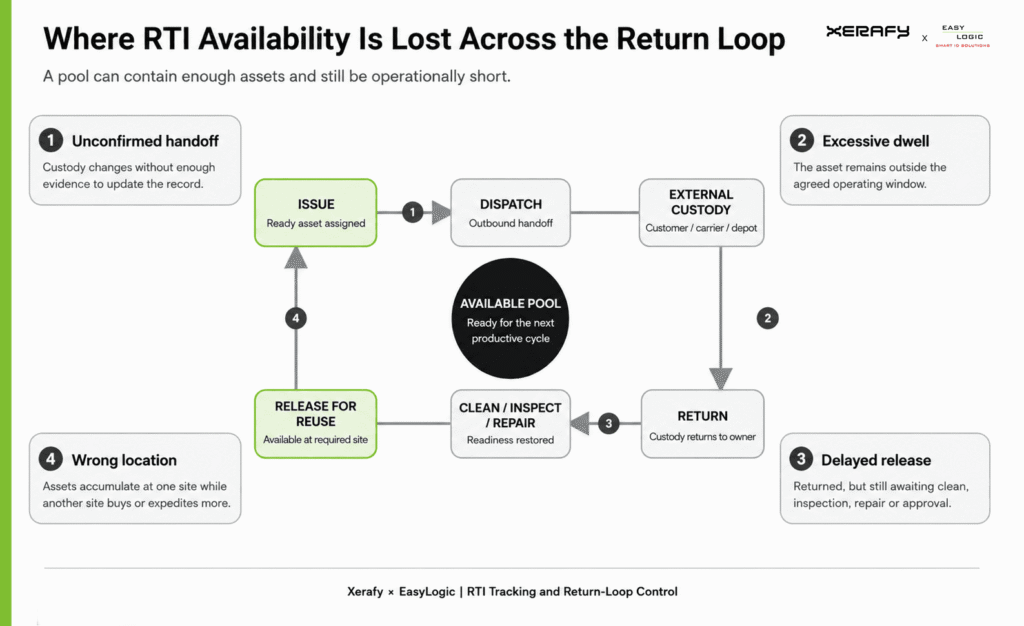
Returnable assets only create value when they keep moving. Pallets, crates, totes, bins, bulk containers and KLTs are repeatedly shipped, returned, washed, handled, stacked and scanned across warehouses, distribution centers, plants, customer sites and closed-loop supply chains.
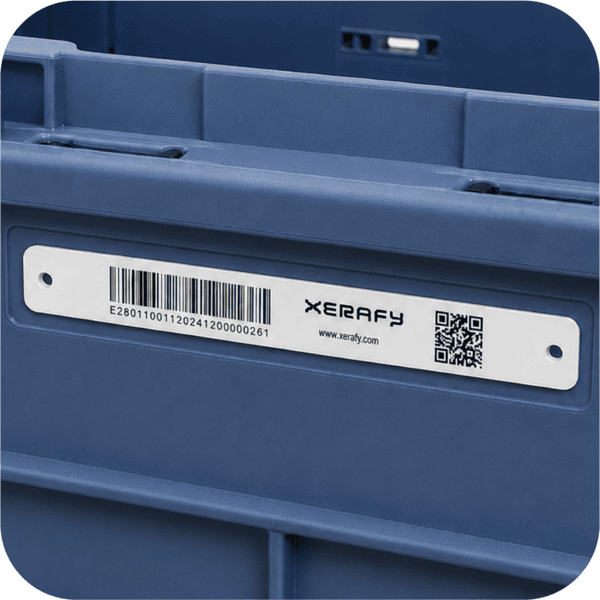
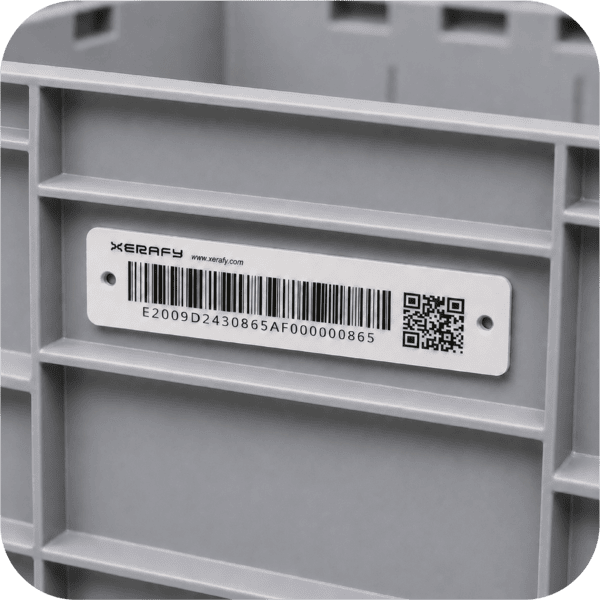
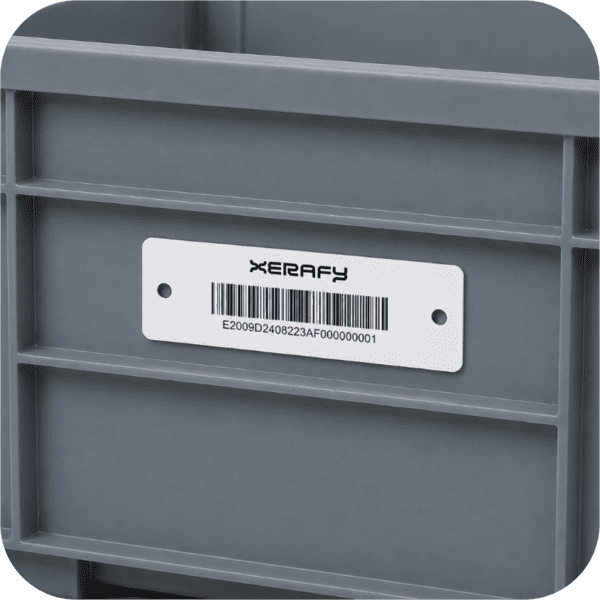
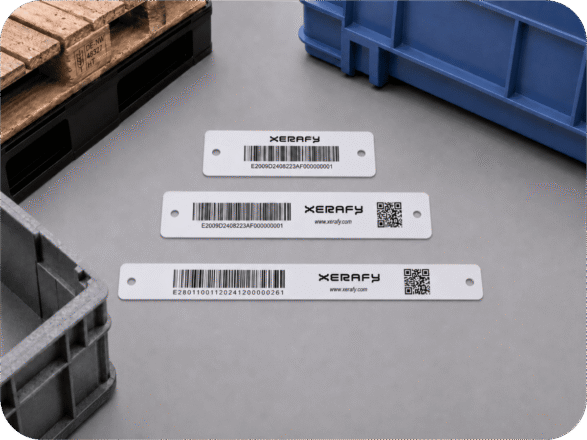
POD TRAK gives each asset a persistent RFID identity for item-level tracking across dispatch, return, inspection, cleaning, inventory control and reuse. Tags can be configured with RFID encoding, human-readable IDs, barcodes, QR codes and logo marking to support both automated RFID reads and visual identification in daily operations.
“Xerafy is a highly regarded specialist in the field of RFID for mission-critical applications, and their RFID tag came out on top of our evaluation.”
POD TRAK bridges the gap between printable RFID labels and larger rugged hard tags, giving returnable assets a low-profile hard tag option when labels are not mechanically protected enough and heavy-duty tags may be overbuilt.
POD TRAK combines low-profile hard-tag protection, long read range on plastics,
and configurable identification for returnable assets moving through repeated logistics cycles.
Built for harsh logistics environments, with IP68 protection against dust, moisture, washdown exposure and repeated handling.
Supports unique RFID serialization, durable laser marking, barcodes, QR codes, logos and human-readable IDs for item-level asset tracking
Slim hard-tag designs fit returnable packaging, RTIs, pallets, crates, totes, bins and KLT containers without excessive tag bulk
Designed for reliable attachment with industrial adhesive, rivets, zip ties or custom mounting methods based on asset geometry and handling conditions
Delivers up to 17 meters read range on plastic assets for reliable identification at portals, dock doors, gates, handheld reads and inventory checkpoints
Compatible with RAIN RFID standards and regional frequency requirements for international logistics, distribution and supply chain operations
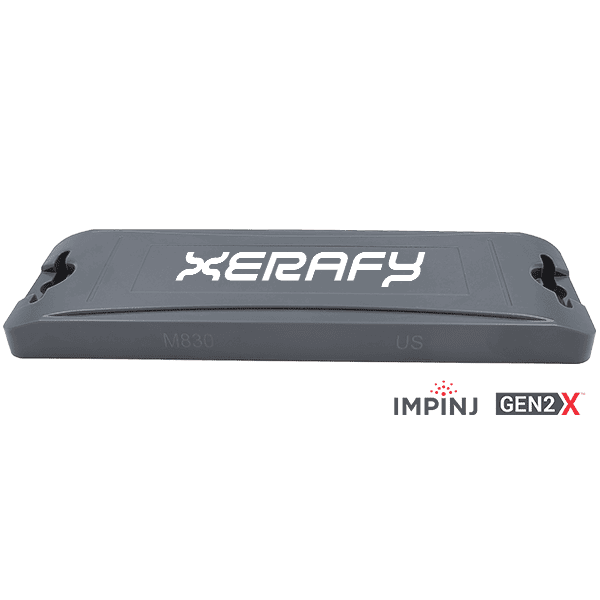
POD TRAK tags are designed for different RTIs, pallets, crates, totes, bins and KLT containers,
with options for long read range, flexible mounting, compact form factor and customized identification

Long Range Identification
The best choice for larger returnable assets that require extended RFID read performance in a slim, narrow tag format.
Its slim design fits into crevices on crates, boxes and reusable containers for better protection during handling and movement. With up to 17 meters read range on plastic, POD TRAK 115 supports durable identification of plastic pallets, bulk bins, crates and large RTIs. Its large visible surface can be custom marked with barcodes, QR codes, human-readable IDs and logos.

Flexible Identification
The best choice for returnable assets that require a wider RFID tag format, flexible fit and larger marking area.
Its low-profile design fits crates, totes, bins and reusable containers with curved, uneven or space-constrained surfaces. With up to 5 meters read range on plastic, POD TRAK 85 supports durable identification across repeated handling, movement and return cycles. Its wider surface can be custom marked with barcodes, QR codes, human-readable IDs and logos.

Compact Identification
The best choice for smaller returnable assets, constrained mounting areas, or applications where identification needs to be durable but discreet.
Its compact, low-profile format fits bins, totes, trays, small containers and reusable logistics assets with limited available surface area. Despite its small footprint, POD TRAK 60 still delivers strong read performance, with up to 3 meters read range on plastic for reliable identification across handling, storage, return and reuse workflows.
POD TRAK tags can be configured to support returnable asset deployments with
durable visual identification, RFID serialization, and mounting options matched to the asset and workflow
Support for printed serial numbers, IDs, logos, and 1D or 2D barcodes for visual identification and backup scanning
Support for permanent laser marking, with tag color and contrast optimized for optical readability in daily operations

Support for unique RFID IDs and EPC serialization for item-level tracking across dispatch, return, inspection, cleaning and reuse workflows

Support for custom engineering, including custom size, industrial adhesives, zip-tie options, and mounting configurations matched to returnable asset geometry
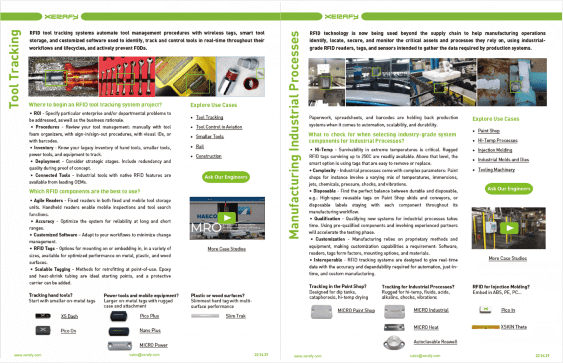
See how Xerafy RFID tags help teams identify, track and manage reusable packaging, pallets, containers and logistics assets across repeated-use workflows:
POD TRAK RFID tags are used to identify and track returnable assets such as RTIs, reusable transport packaging, plastic pallets, crates, bins, bulk containers, reusable containers, storage units and KLT containers across logistics, distribution, manufacturing and inventory workflows.
Yes. POD TRAK tags are designed for durable RFID identification on plastic returnable assets, including pallets, crates, bins, reusable containers and KLTs. The best model depends on the asset size, mounting area, read range requirement and deployment environment.
Choose POD TRAK 115 for larger returnable assets that need longer read range and a slim, narrow tag format.
Choose POD TRAK 85 for flexible identification, wider marking needs and curved or uneven surfaces.
Choose POD TRAK 60 for smaller assets, constrained mounting areas or discreet identification.
Yes. POD TRAK tags can be used to identify and track pallets moving through inbound, outbound, warehouse, plant and return workflows. For plastic pallets and reusable transport assets, POD TRAK 115 is typically the best fit when longer read range is required.
POD TRAK tags can support many reusable container and bin tracking workflows, including returnable logistics assets that may be cleaned or exposed to moisture.
For industrial dishwashers, food-service containers, chemical exposure or repeated wash cycles, the tag, mounting method and marking method should be qualified against the actual process before deployment.
POD TRAK tags can be mounted using industrial adhesive, rivets, zip ties or custom attachment methods, depending on the asset surface, handling conditions, available mounting area and expected deployment lifecycle.
Yes. POD TRAK tags can support RFID encoding, serial numbers, barcodes, QR codes, logos and human-readable IDs, helping teams combine automated RFID reads with visual identification and backup scanning.
Yes. POD TRAK tags are designed for harsh logistics environments, with IP68 protection against dust, moisture and washdown exposure. They are suitable for many returnable asset workflows involving handling, storage, cleaning and outdoor logistics movement.
For continuous outdoor exposure, heavy impact, stronger mechanical mounting, extended weather exposure or maximum read range, the OUT TRAK series may be the better fit.
POD TRAK tags are passive RAIN RFID / UHF RFID tags and work with standard UHF RFID readers, including handheld readers, fixed readers, dock-door portals, gates and inventory checkpoints.
Reader selection depends on the read point, asset movement, read range requirement, antenna setup and software workflow.
Use POD TRAK when returnable assets need a low-profile hard tag with stronger mechanical protection than a label, but do not require the maximum ruggedness, outdoor durability or mounting strength of larger heavy-duty RFID tags.