The Challenge: Manual Tool Inventory in Aircraft Line Maintenance
In aircraft line maintenance, mechanics must account for their tools at the end of each shift so missing items can be investigated before they become a Foreign Object Debris (FOD) risk.
A complete inventory took about 20 minutes per mechanic and depended on manual checking and reconciliation, creating an operational bottleneck and increasing the risk of incomplete or inaccurate records.
“We needed a solution that would deliver inventory checks with a single scan, quickly and with 100 percent accuracy,” said the Executive General Manager, Line Services. “The interface had to be easy-to-use, while the wide variety of tools to track meant we wanted the flexibility to be able to tag tools and devices of any size.”
The Requirements: Retrofit Existing Tools and Toolboxes
The project team wanted to automate inventory without replacing the operation’s existing tools and personal toolboxes.
The RFID system therefore needed to:
Identify tools with different sizes, materials and available mounting areas.
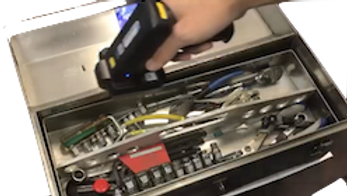
Complete each toolbox inventory using a handheld RFID reader.
Compare the tools detected with the expected contents of that toolbox.
Connect the mobile workflow to the existing back-office system.
Remain simple enough for mechanics to use during daily shift handovers.
The Implementation: RFID Tags, Handheld Readers and Connected Software
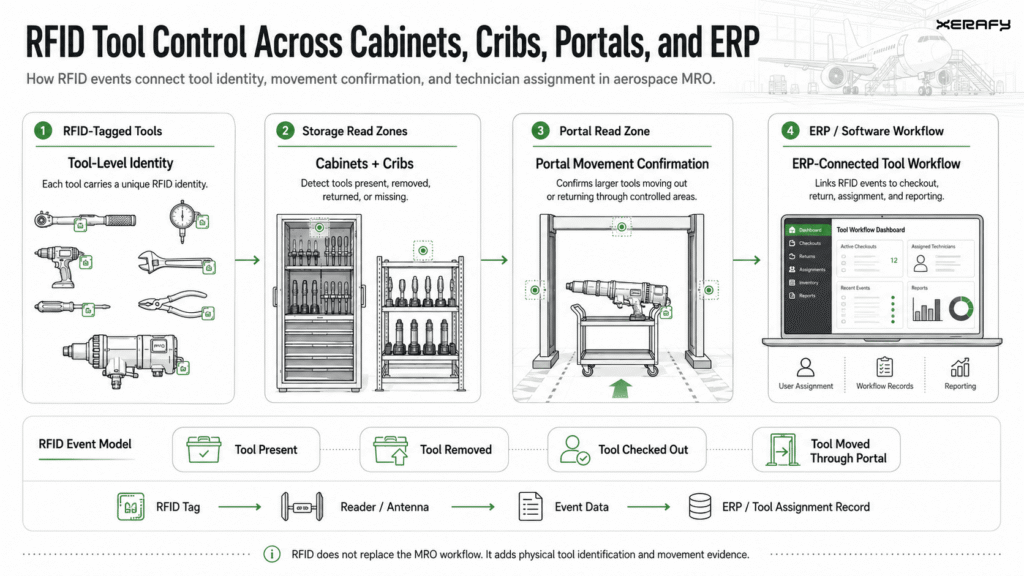
The implementation at the Hong Kong operation combined four layers:
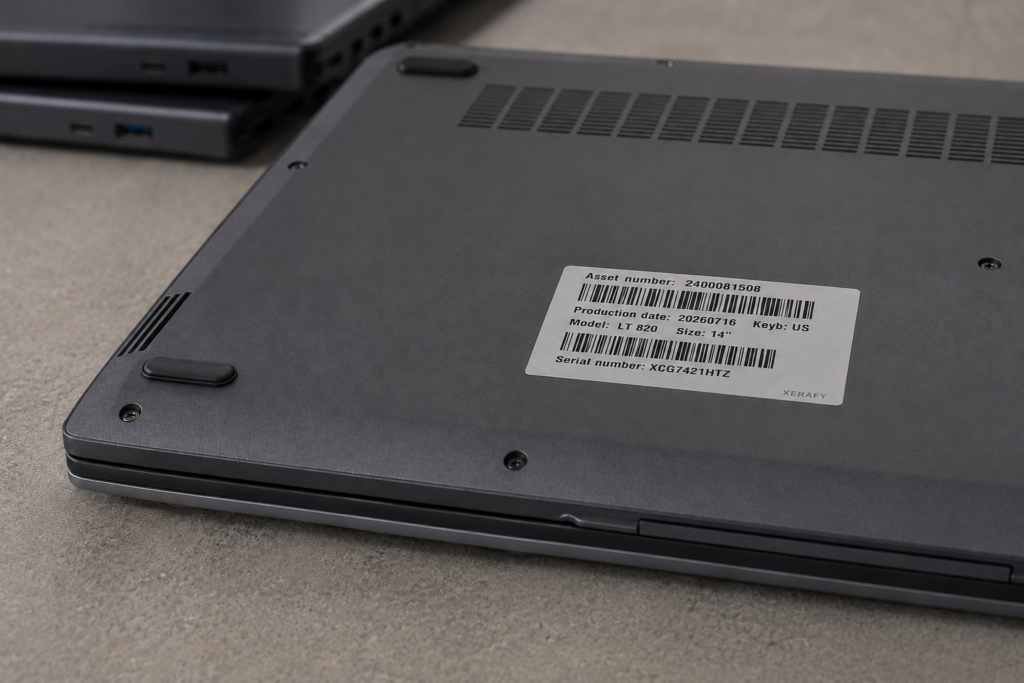
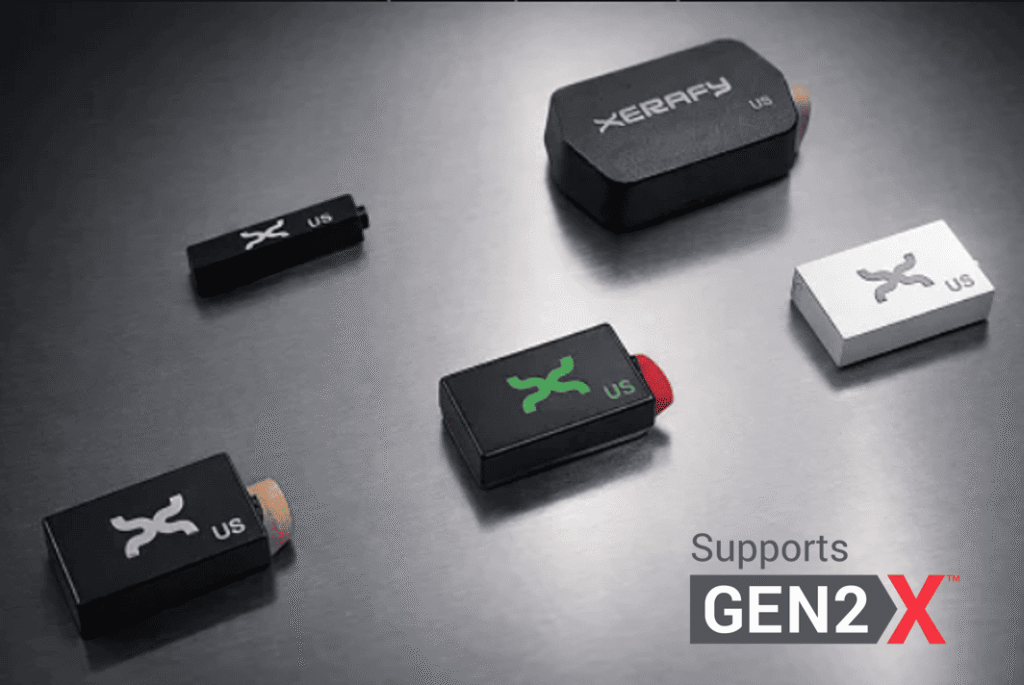
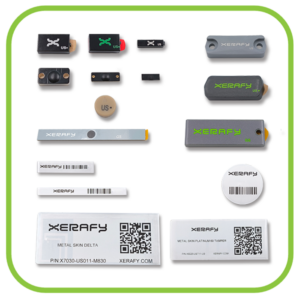
Tool identification: Compact, rugged PICO RFID tags were retrofitted to existing hand tools and other devices. Adhesive and heat-shrink protection were used according to the tool geometry and handling requirements.
Asset enrollment: Each RFID identifier was associated with the corresponding tool record, including its owner, serial number and expected toolbox.
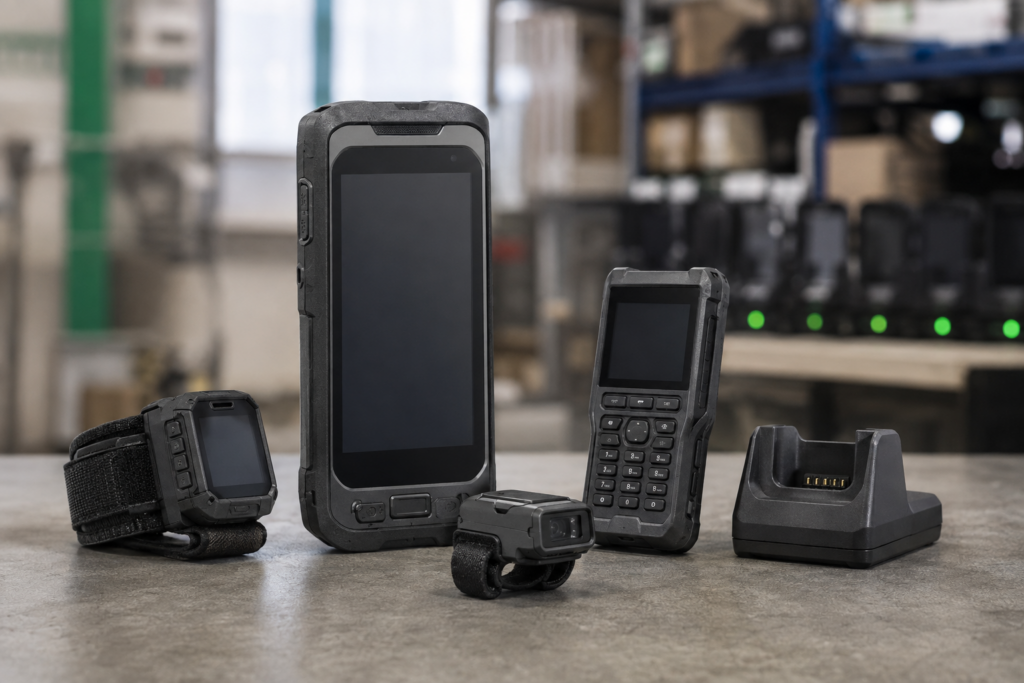
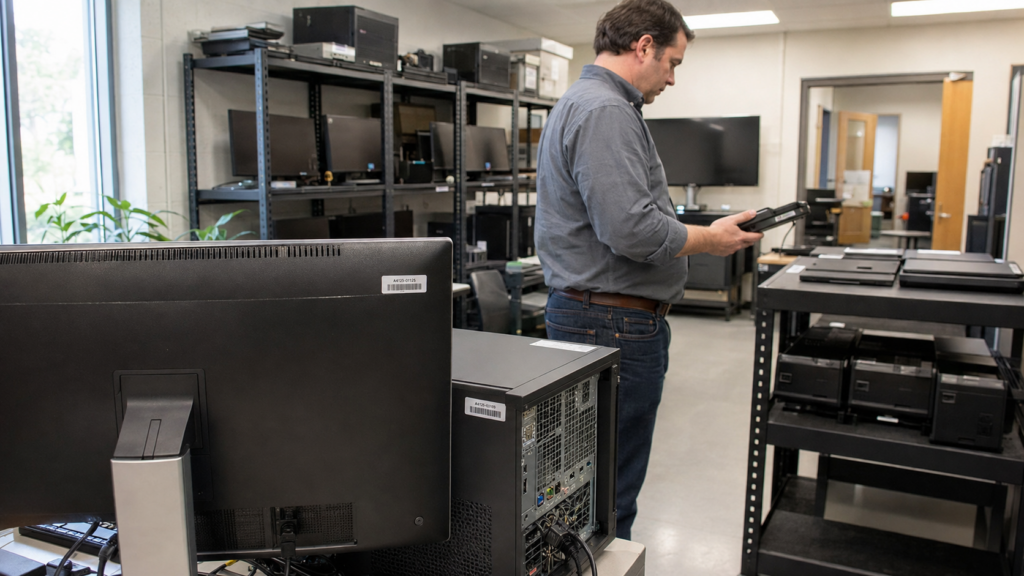
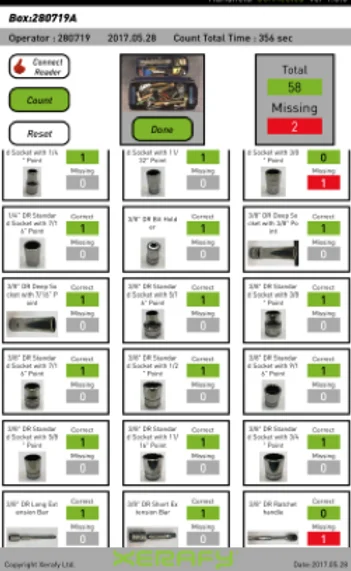
Mobile inventory: Mechanics used an Android application and handheld RFID reader to detect the tagged tools and compare the results with the expected toolbox contents.
Back-office records: Inventory results could be synchronized with the back-office system or exported as reports for reconciliation and review.
This architecture allowed the MRO to automate daily inventory while retaining its existing tools and toolboxes.
The Results: Tool Inventory Time Reduced by 85%
The RFID tool tracking workflow reduced each toolbox inventory from approximately 20 minutes to under three minutes. This represented an 85% reduction and saved approximately 17 minutes per mechanic for each daily inventory check.
The pilot delivered three measurable operational changes:
Faster inventory: Mechanics could detect the tagged contents of a toolbox in a single handheld RFID inventory cycle.
Automated reconciliation: The application compared the tools detected with the contents expected in each toolbox and recorded the result.
Earlier exception handling: Missing tools could be identified for investigation during the inventory process, strengthening tool accountability within the MRO’s FOD-control procedures.
The measured time saving demonstrated a direct productivity return from automating a repetitive daily process across 3,200 tools.
What This Aircraft MRO Pilot Demonstrated
The project showed that an aircraft MRO can automate personal-toolbox inventory without replacing its existing tools or storage equipment. The operational gain came from combining suitable tool-level RFID tags with accurate asset enrollment, handheld reads, expected-toolbox records and a defined exception process.
The measured results apply to this handheld inventory workflow. RFID cabinets, cribs, trolleys and portals introduce different read-zone, orientation and storage-density requirements and should be validated separately under representative operating conditions.
How to Evaluate RFID Tool Control for Aircraft MRO
- Start with a representative sample of the actual tool fleet, including metal hand tools, sockets, gauges, plastic-handled tools and difficult-to-tag assets. For each category, evaluate tag fit, placement and attachment without interfering with normal tool use, storage, calibration or inspection.
- Test the approved configurations with the intended handheld, cabinet, crib, trolley or portal reader. Include representative orientations and fully loaded storage conditions, then verify asset enrollment, expected-toolbox records, exception handling and integration with the selected tool-management or MRO system.
- Before scaling, measure inventory time, missed or unintended reads, attachment failures and workflow adoption.
Xerafy engineers can support tag selection, placement and read-performance testing using the MRO Test Pack, while qualified partners provide the reader, software and integration layers.
Xerafy develops field-proven RFID tags and labels for tracking assets in demanding industrial and enterprise environments. Its portfolio combines application-specific RFID engineering with products available for evaluation and deployment worldwide.
For requirements beyond standard products, Xerafy provides Custom RFID Tag services spanning printing, encoding, serialization and production configuration through to custom product engineering.