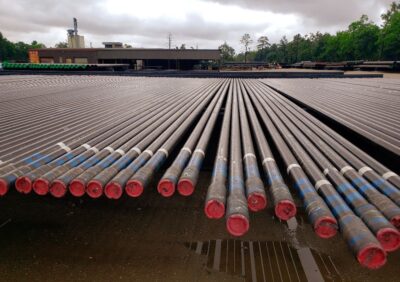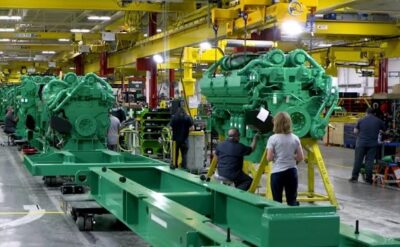
This greenfield LNG project in the Middle East involves a complex, multi-vendor EPC supply chain spanning equipment fabrication, logistics, construction, and commissioning.
To maintain the identity of critical equipment across these project stages, the global EPC selected Xerafy OUT TRAK RFID tags for asset traceability from vendor dispatch through site commissioning and handover.
Project-specific names and locations have been withheld at the request of the project owners for confidentiality and competitive reasons.
Managing a Complex Portfolio of LNG Assets and Suppliers
The LNG project involved a broad equipment portfolio sourced from multiple vendors and fabrication locations:
Rotating machinery: pumps, compressors, electric motors and gearboxes.
Static process equipment: separators, heat exchangers and pressure vessels.
Electrical equipment: transformers, motor control centers and switchgear.
Instrumentation and controls: junction boxes, transmitters and analyzers.
Modular assemblies: packaged utilities, skid-mounted equipment and structural pipe racks.
Equipment passed through international fabrication yards, packaging hubs, logistics providers and site staging areas. Field-mounted instruments, off-site structural assemblies and equipment arriving in multiple containers added complexity to identification and receiving.
The EPC needed equipment identity to remain consistent across these handoffs. Its traceability requirements covered the association between physical equipment and Inspection Test Plans (ITPs), Material Receiving Reports (MRRs), shipping documents, vendor compliance records and equipment data. These records support acceptance, inspection, commissioning and handover.
The RFID mandate applied to selected equipment within this wider portfolio. Eligible items included pumps, compressors, motors, power transformers, outdoor cabinets, instrumentation and specified valves. Pipes, pipe supports and cables were excluded from the tagging list.
Defining eligibility gave package vendors a consistent basis for ordering and installing tags. The supplier tagging requirement established the RFID identifier-to-equipment association before shipment, preparing equipment records for later inspection, maintenance and spare management.
RFID Identification Linked to Equipment Records
The EPC specified passive UHF RFID compliant with ISO/IEC 18000-6C (EPC Gen2) to establish a standardized equipment identity across vendors and project stages.
Xerafy OUT TRAK tags were selected for identification on metallic equipment exposed to outdoor and industrial conditions. Each tag’s serialized identifier provides the link between the physical equipment and its project record.
Tag Performance and Environmental Requirements
For outdoor-mounted and marine-facing equipment, the project required:
On-metal RFID performance with a read range of at least six meters.
Resistance to UV exposure, impact, vibration and chemicals.
An operating temperature range of −40°C to +85°C.
ATEX and IECEx Zone 1 and Zone 2 certification where required by the installation environment.
The installed tag, mounting position and reader configuration need to meet the required read distance under the actual equipment and site conditions.
Encoding and Equipment Data
The EPC specified a consistent identification structure across participating vendors:
A unique serialized EPC of at least 96 bits for each tagged asset.
At least 512 bits of user memory for project-specific data.
Pre-encoding using a standardized structure incorporating asset class, vendor ID and serial number.
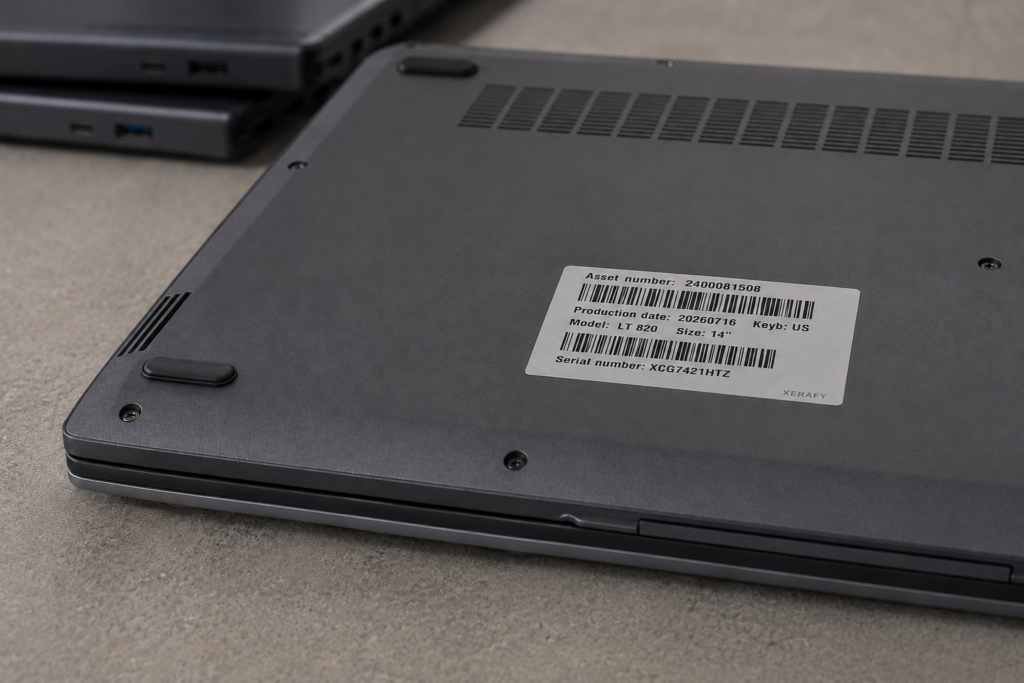
Human-readable identification and a corresponding 1D or 2D barcode for field verification.
The project database was intended to associate each tagged item with its equipment metadata, including type, location and serial number, together with:
Material Receiving Reports (MRRs).
Inspection Test Plans (ITPs).
Shipping documentation.
Vendor compliance records.
This structure gives project teams a consistent equipment identifier to use when retrieving receiving, inspection and handover information. Human-readable identification and barcodes provide additional ways to verify the equipment in the field.
Selecting OUT TRAK for the Equipment
OUT TRAK’s rugged on-metal format suited equipment moving between supplier facilities, logistics hubs, outdoor staging areas and the LNG site.
Tag selection also needed to accommodate the available mounting surface, operator access and project installation requirements. Preserving the identifier through handling and installation supports its continued use for commissioning, handover and subsequent maintenance records.
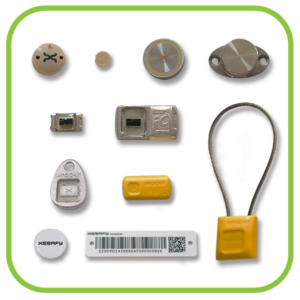
Xerafy provides a broad portfolio of RFID tags engineered for Oil and Gas infrastructure.
They come with weldable, bandable, cable-tie, and hanging options to support diverse equipment requirements:
- XPLORER: embeddable tags for HPHT environments (e.g., drill pipes, tubulars, compressors)
- ROSWELL: surface-mount tags with brackets for welding or rivets
- POD and TRAK series: long-range tags featuring industrial adhesives
- On-Metal RFID labels: field-printable, for inventory, supply chain, and maintenance parts
Preparing Equipment Tags Before Shipment
The EPC made RFID tagging part of equipment suppliers’ delivery requirements. Vendors had to source tags from the project-selected RFID supplier and apply them to eligible equipment before shipment.
Through Xerafy’s Service Bureau, tags can arrive ready for installation with:
A unique EPC encoded to the project’s identification structure.
A matching 1D or 2D barcode.
Human-readable equipment identification.
Equipment vendors supplied the equipment information using the contractor’s database template. The RFID supplier was responsible for consolidating the identifier-to-equipment mappings across vendors and packages.
Mounting and Checking Tags at the Supplier’s Workshop
OUT TRAK tags can be mechanically fixed or bonded according to the equipment surface, available mounting position and installation requirements. The project specified fastening options such as rivets, bolts or straps.
Tags had to remain accessible for operator scanning. Suppliers were required to install them at their workshops before dispatch. Where installation in the final position was impractical, tags could be supplied separately for later fitting.
Testing was required at both stages: the RFID supplier checked tag functionality before delivery, and equipment vendors provided a test report confirming configuration and functionality before shipping the equipment.
Keeping Equipment Identity Through Handover
Applying the identifier at the vendor stage gives project teams a common reference for equipment moving through shipping, receiving, site staging, inspection, commissioning and handover.
Teams can use that identifier to retrieve the associated equipment record and its receiving, inspection and shipping documentation. Maintaining the association as equipment changes location or passes between teams supports continuity in QA/QC and handover records.
The tagging approach also prepared equipment for identification during plant operations. Portable readers were specified for accessing information from a central equipment database, including datasheets and maintenance history. The plant owner was responsible for the readers, RFID infrastructure and enterprise systems.
For EPC teams planning a similar deployment, supplier tagging needs to cover both the physical installation and the equipment record: a readable tag in an accessible position, checked before dispatch, with an identifier that matches the information handed over.
Evaluating RFID for Equipment Traceability in EPC Projects
For EPC teams evaluating supplier-applied RFID, start by defining which equipment needs identification and how teams will use its records during project delivery and plant operations.
Test tag placement, attachment and reading on representative equipment under expected handling and site conditions.
Confirm that the encoded identifier, barcode and equipment record remain consistent from supplier preparation through receiving and handover.
Xerafy’s engineers can help review these requirements and qualify suitable tags before rollout across equipment vendors.
Xerafy is a pioneer in Industrial RFID, bringing to market several innovations that enable advanced industrial identification and automation capabilities.
In addition to a complete range of field-proven RFID tags available off-the-shelf, Xerafy offers Custom RFID Tags services, covering everything from a personalization service bureau to custom-design engineering capabilities.