RFID tags and labels used in healthcare and life sciences must be selected for both the sterilization exposure and the workflow around it. Steam autoclave, EtO, gamma irradiation, e-beam and chemical disinfection create different thermal, chemical, radiation, material and adhesion requirements. The right starting point depends on what is being identified, whether it is reused or disposable, where the RFID is applied and when it must be read.
Xerafy provides sterilization-ready rugged tags and specialty labels for medical devices, surgical trays, sterile packaging and healthcare equipment. Our engineers help medical device manufacturers, RFID label converters, sterilization providers and healthcare organizations compare form factors, materials, attachment methods and read performance, then validate shortlisted options on representative items in the intended process.
1. Choose RFID Around the Sterilization Method
Different sterilization methods create different failure modes for RFID tags, labels and their attachment. Selection should account for the complete exposure profile, the tagged material, whether the item is reusable or disposable, and when it must be read.
Autoclave Sterilization
RFID for autoclave applications must withstand pressurized steam, high humidity and temperatures commonly ranging from 121°C to 134°C.
For reusable surgical trays, containers and medical devices, evaluate:
- Repeated Exposure: The number, temperature and duration of the expected autoclave cycles.
- Tag Construction: Resistance to heat, moisture, pressure and cleaning chemicals.
- Attachment: The mounting method, available space and geometry of the tagged item.
- RFID Performance: Memory integrity and read performance before and after cycling.
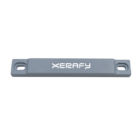
Typical starting points include MICRO Autoclave for compact identification and ROSWELL Autoclavable for ultra-rugged identification of trays, cases and containers.
The MICRO Medical is a compact, high-performance RFID tag engineered for surgical instruments and medical devices. It’s built with medical-grade material and designed to withstand over 600 autoclave cycles, as well as exposure to harsh sterilization chemicals.
Ethylene Oxide Sterilization
EtO sterilization is commonly used for temperature-sensitive medical devices and sterile packaging.
RFID evaluation should cover:
- Chemical Exposure: The specific EtO process, aeration conditions and number of exposures.
- Material Compatibility: The response of the RFID construction, face material and adhesive.
- Application Surface: The device or packaging substrate on which the label is applied.
- Required Lifecycle: Whether the RFID identity is needed through production and distribution or throughout the device’s service life.
Candidate tags or labels should be tested on the final substrate using the intended EtO process.
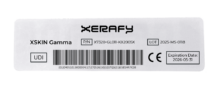
The XSKIN Gamma 73 x 20 is designed to withstand repeated Gamma and E-beam sterilization cycles, while supporting global RAIN RFID standards for international deployments.
Gamma Irradiation
Gamma irradiation can affect RFID electronics, label materials, adhesives and printed information.
Important evaluation points include:
- Radiation Exposure: The total dose and expected number of sterilization cycles.
- RFID Performance: Readability and data integrity before and after irradiation.
- Label Construction: The stability of the antenna, materials, adhesive and printed information.
- Final Packaging: The substrate, application position and complete packaging configuration.
XSKIN Gamma provides a specialty label platform for evaluation on radiation-sterilized medical devices, consumables and packaging. Our guide to RFID labeling for gamma sterilization explains how dose, materials, RFID performance and serialized identification interact within these workflows.
Electron Beam Sterilization
E-beam sterilization delivers ionizing radiation over a shorter exposure period than gamma irradiation.
Evaluation should consider:
- Process Parameters: The intended dose, energy level and exposure profile.
- RFID Construction: The response of the electronics, antenna and label materials.
- Packaging Configuration: Product arrangement, packaging density and label placement.
- Read Requirements: When and where the RFID identity must be captured after sterilization.
Testing should use the final packaging configuration and intended e-beam parameters.
Disinfection, Sanitization and Pasteurization
Healthcare equipment, labware, textiles and reusable supplies may be exposed to chemical disinfectants, ultraviolet light, controlled heat, moisture and repeated cleaning.
Selection should reflect:
- Cleaning Process: The agent, concentration, temperature and exposure duration.
- Exposure Frequency: The expected number of cleaning or disinfection cycles.
- Physical Wear: Moisture, abrasion and routine handling.
- Service Life: The period over which the tag or label must remain attached and readable.
2. How to Validate RFID for Sterilization Workflows
Sterilization-ready RFID should be qualified against defined operating conditions and the complete application workflow. A useful validation plan covers:
Exposure Profile: Sterilization method, temperature, pressure, radiation dose, chemicals, cycle duration and expected number of exposures.
Tagged Item: Material, geometry, available space and whether the RFID is applied to the device, tray, container or packaging.
Attachment Method: Adhesive, mechanical attachment, embedding or integration into the final packaging construction.
RFID Performance: Readability, memory integrity and physical condition before and after the required exposures.
Read Environment: Reader position, distance, orientation, item density and the required RFID read points throughout production, sterilization, distribution or reprocessing.
Production Process: Converting, printing, encoding, application and quality-control requirements for the final tag or label.
RFID contributes a persistent serialized identity and read evidence to the validated process. The software or tracking system can associate those events with production, sterilization and handling records, while sterilization efficacy, product readiness and regulatory compliance remain governed by the approved process and responsible organization.
Where a standard tag or label does not meet the required dimensions, materials, attachment, chip, memory or delivery format, custom RFID engineering can adapt the construction around the application and its qualification requirements.
3. Where Sterilization-Ready RFID Is Used
Sterilization-ready RFID supports identification and traceability wherever medical devices, packaging, trays or reusable healthcare items must remain identifiable through demanding production, sterilization and handling processes.
Medical Device Manufacturing and Loaner Systems
Medical device manufacturers can apply RFID to devices, components, trays, cases or packaging according to the required lifecycle and available tagging surface. Applications include:
Production Traceability: Connect a serialized RFID identity with manufacturing, inspection and sterilization records.
Device and Kit Identification: Identify medical devices, implants, procedure kits and their associated containers.
Consigned Inventory: Improve visibility of high-value devices moving between manufacturers, distributors and healthcare facilities.
Loaner Management: Track surgical sets and cases through allocation, shipment, receiving, use and return.
For reusable surgical sets, RFID can support both the manufacturer-managed loaner-system workflow and the hospital’s tray-level reprocessing process.
Sterile Packaging and Converting
RFID can be incorporated into medical-device and pharmaceutical packaging to maintain a serialized identity across production, sterilization, distribution and inventory workflows. Packaging development should address:
Sterilization Method: Gamma, e-beam, EtO or another defined exposure process.
Packaging Construction: Substrate, adhesive, barrier materials and label placement.
Production Requirements: Converting, printing, encoding, inspection and application.
Read Environment: Carton, kit, pallet or item-level reads throughout the supply chain.
The smart-label examples presented with AIPIA at CPHI show how RFID can be integrated into healthcare and pharmaceutical packaging around the product, packaging and sterilization requirements.
Surgical Trays and Sterile Processing
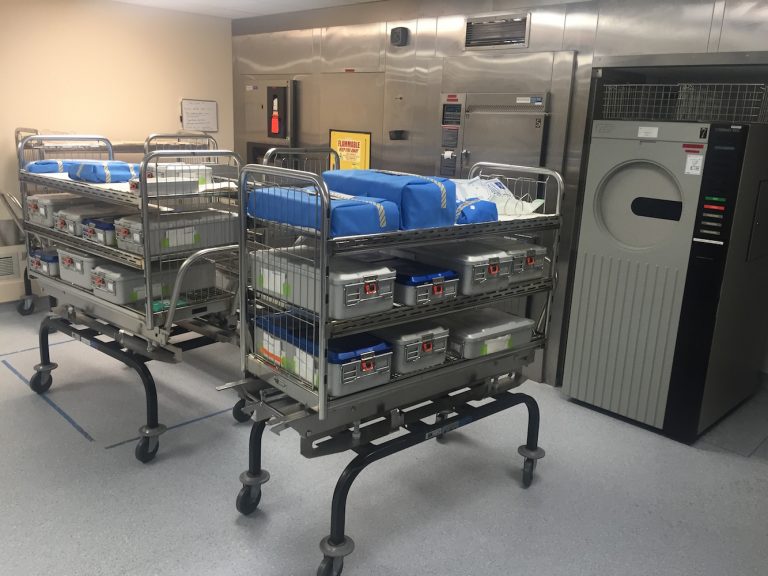
Hospitals and sterile-processing providers can assign a persistent RFID identity to surgical trays, containers and cassettes. Tray-level RFID supports:
Workflow Status: Identify whether a tray is awaiting cleaning, assembly, sterilization, storage or release.
Cycle Association: Connect the tray identity with the corresponding reprocessing and sterilization records.
Tray Availability: Reduce manual searches and improve visibility of ready and in-process inventory.
Loaner Handoffs: Coordinate receiving, reprocessing, use and return of manufacturer- or distributor-owned trays.
A sterile processing tracking system combines this persistent tray identity with defined read points and hospital workflow software.
Healthcare Equipment, Labware and Textiles
Reusable healthcare equipment, laboratory items and textiles may undergo repeated cleaning, disinfection, sanitization or pasteurization. RFID selection should reflect:
Item Material: Metal, plastic, glass, fabric or a combination of materials.
Cleaning Exposure: Chemicals, moisture, temperature, pressure and abrasion.
Attachment: Adhesive, mechanical, embedded or sewn installation.
Service Life: The expected number of cleaning cycles and required period of identification.
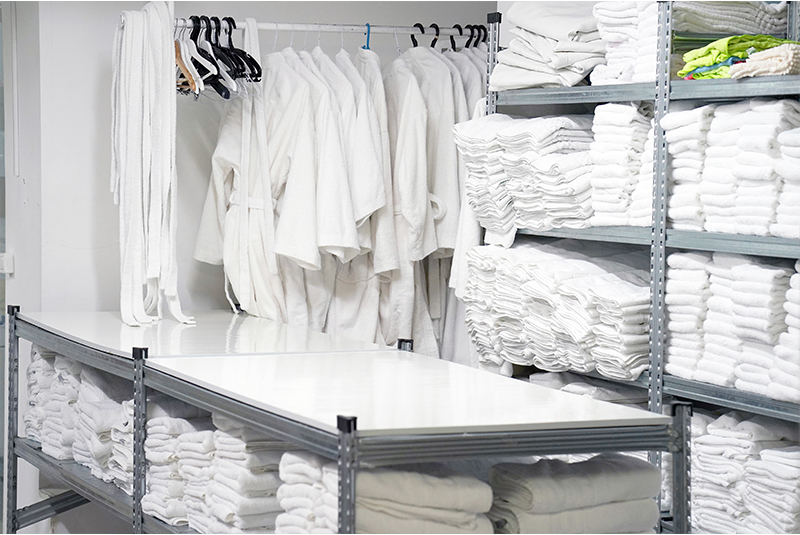
For uniforms, linens and other washable textile items, TEX TRAK RFID tags provide purpose-built form factors for repeated commercial and industrial laundry processing.
How to Evaluate RFID for a Sterilization Workflow
A useful evaluation starts with representative items and the intended process rather than a standalone tag test. Define:
Item and Tagging Level: Identify whether the RFID will be applied to the device, tray, container, packaging or another reusable item.
Sterilization Exposure: Document the method, temperature, pressure, chemicals, radiation dose, cycle duration and expected number of exposures.
Physical Integration: Define the available dimensions, application surface, mounting method and any packaging or converting constraints.
RFID Requirements: Confirm frequency, chip, memory, encoding and data-retention requirements.
Read Performance: Test the intended reader positions, distance, orientation, item density and handling conditions before and after exposure.
Production Readiness: Evaluate printing, encoding, application, inspection, delivery format, volume and implementation timing.
Planning an RFID evaluation for a sterilization workflow?
Start with the Healthcare RFID Test Pack to compare autoclavable rugged tags, low-profile disposable labels and specialty smart labels on representative items.
Ask Xerafy’s engineers to review the item, sterilization process, attachment or converting requirements and intended read environment.
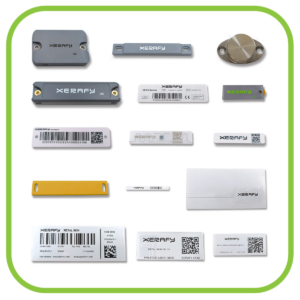
Xerafy designs and manufactures rugged RFID tags, specialty smart labels and custom constructions for demanding healthcare and life-science workflows. Its portfolio supports medical devices, surgical trays, sterile packaging, healthcare equipment and other items exposed to autoclave processing, radiation, chemicals, washing and repeated handling.
Xerafy works with medical device manufacturers, label converters, system integrators, sterilization providers and healthcare organizations to select, integrate and qualify RFID tags and labels around the item, exposure process, production requirements and intended read environment.