When cylinder identity depends on manual scans, paper records, or damaged visual labels, fleet visibility breaks down across sites and handoff points. RFID traceability gives each cylinder a durable digital identity that can be captured at key workflow checkpoints, including receiving, filling, dispatch, delivery, return, inspection, and maintenance.
For large industrial gas operators, the challenge is not only choosing an RFID tag. The deployment must account for curved metal cylinders, mixed fleet conditions, attachment method, read-zone design, safety requirements, system integration, and multi-site rollout standards.
This guide shares Xerafy’s engineering perspective on RFID for industrial gas cylinder traceability, including where rugged RFID tagging fits, what to validate before rollout, and how operators can evaluate tag fit, attachment, read performance, and deployment readiness on real cylinders.
Evaluate RFID for your industrial gas cylinder fleet
- Review the application
Ask Xerafy Engineers to help assess cylinder types, mounting locations, read points, safety requirements, and integration needs before pilot design. - Choose the RFID tag
Xylinder OUT is designed for curved on-metal assets such as industrial gas cylinders, LPG cylinders, gas tanks, and kegs. - Test on real cylinders
Request the Cylinder RFID Test Pack and validate RFID performance on your cylinder surfaces, mounting positions, reader setup, and operating workflow.
1. Use Cases: Where Cylinder Traceability Matters Most
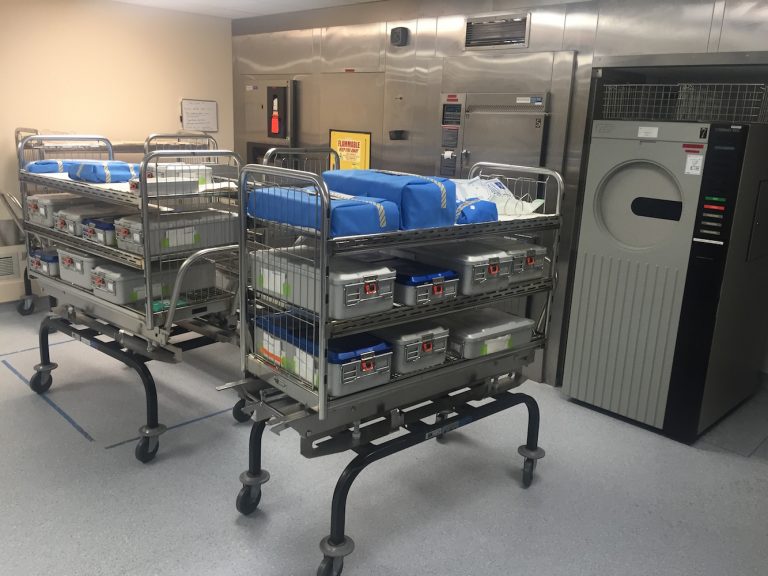
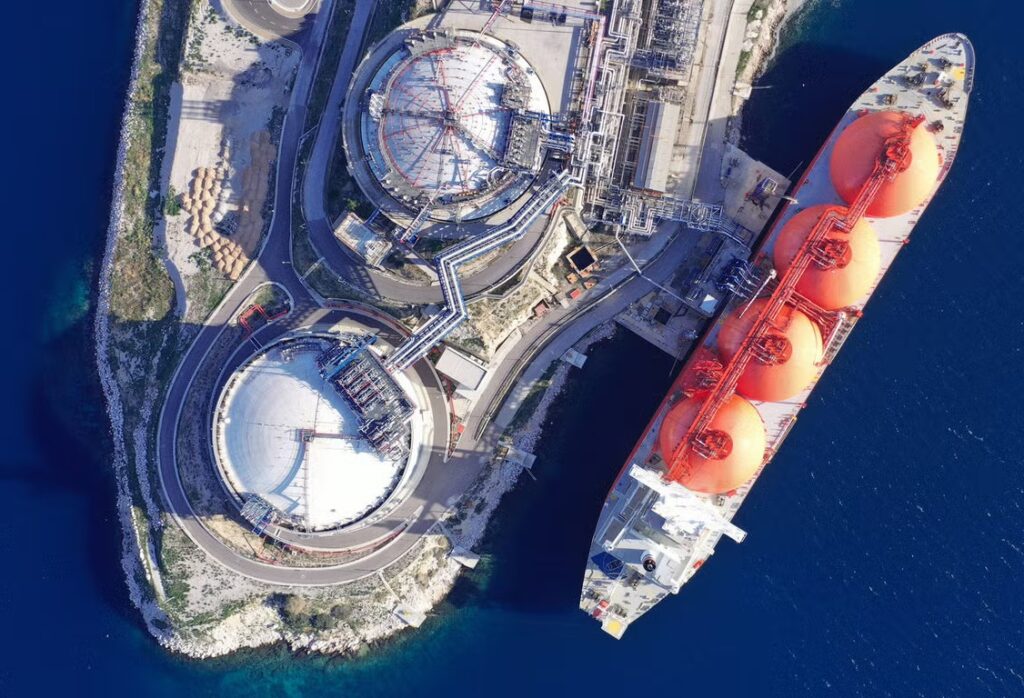
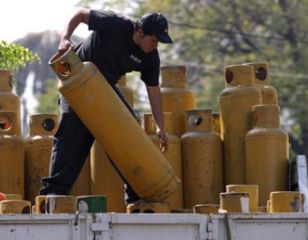
Gas cylinders support a wide range of high-risk, high-frequency workflows: Hospitals and pharmacies handle oxygen deliveries daily, while industrial operations rely on specialty gases for cutting, welding, and manufacturing. In mobile use cases, depots and delivery fleets must trace hundreds or thousands of cylinders in transit.
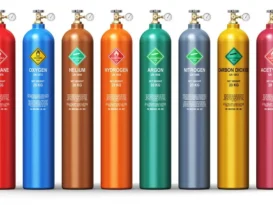
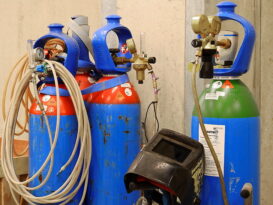
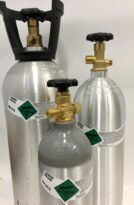
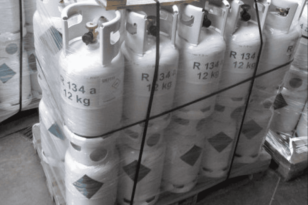
Gas Types in Scope
- Industrial – Gas cylinders are commonly used for welding and cutting operations and manufacturing processes: Acetylene, argon, helium, nitrogen, specialty gases
- Medical – Medical-grade air used in hospitals and for anesthesia during surgical procedures: Oxygen, nitrous oxide, anesthetic gases
- Food – Carbonation of beverages, food packaging
- Refrigerants – Used in air conditioning and refrigeration systems (FGAS Compliance)
2. What’s at Risk Without Cylinder-Level Traceability
In the absence of real-time visibility, operators face multiple risks:
- Misidentifying a medical oxygen cylinder or delivering the wrong gas blend can have life-threatening consequences.
- Inventory losses due to misplaced, stolen, or substituted cylinders impact fleet utilization and bottom line.
- Compliance failures related to requalification dates, inspection logs, or expired cylinders expose operators to regulatory penalties.
- Manual tracking using paper logs or barcodes slows down processes and introduces human error.
- Environmental challenges, such as metal racks or humidity, interfere with barcode scanning.
“Manual processes can’t keep up with fast-moving, safety-critical logistics. RFID automates the traceability that regulations demand.”
3. Why RFID Now: Industry Pressures and Compliance Trends
The industrial and medical gas industries are under increasing pressure to modernize. Regulations like ATEX, FGAS, and EU MDR require auditable traceability, while the pandemic has accelerated demand for medicinal oxygen logistics.
Operators must demonstrate:
- End-to-end chain of custody
- Digital traceability of inspections and compliance
- Faster turnaround and zero-defect logistics
RFID offers a solution that is scalable, automated, and proven in the field.
4. RFID Lifecycle Control and Automation
RFID turns each cylinder into a traceable asset with a unique digital ID. Every touchpoint can be captured automatically, creating a digital audit trail.
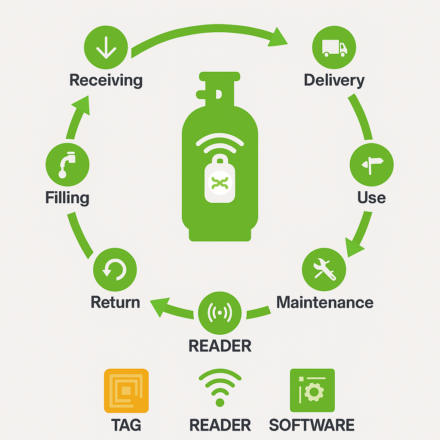
Lifecycle Events Tracked:
- Receiving
- Filling
- Delivery
- Use
- Return
- Maintenance
Infrastructure Applications:
- Fixed readers installed at entry gates, fill stations, and docks enable hands-free identification.
- Handheld readers support manual scans during audits, delivery runs, or warehouse picks.
- NFC-enabled smartphones can provide tap-to-verify confirmation at the point of care or delivery.
System Integration:
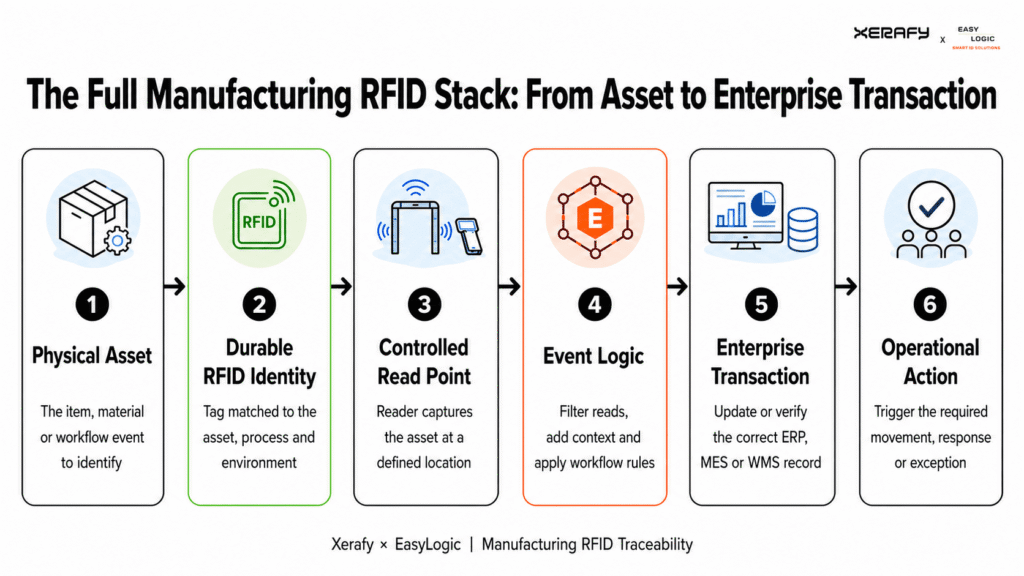
- Syncs with ERP, WMS, and CMMS platforms
- Event triggers and alerts for compliance, expiring inventory, or exceptions
5. Xylinder OUT for Curved Metal Cylinder Fleets
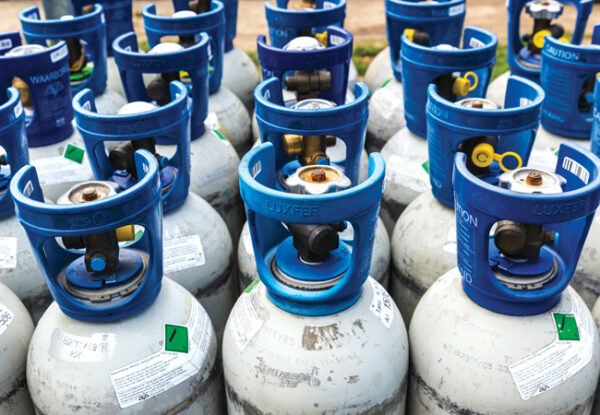
For industrial gas cylinders, the RFID tag must fit a curved metal surface, survive handling, and read reliably at the workflow checkpoints where cylinder identity is captured.
Xylinder OUT is a bendable on-metal RFID tag designed for curved assets such as industrial gas cylinders, LPG cylinders, gas tanks, and kegs.
Its durable construction supports survivability against shock, UV exposure, and washdown conditions, while delivering up to 7 m read range for outdoor tracking and returnable asset workflows.
Mounting options support fast adhesive deployment or stronger bonded installation when higher holding strength is required.
For enterprise cylinder fleets, Xerafy recommends validating tag placement, attachment method, reader setup, and operating conditions before rollout.
6. Deployment Best Practices From the Field
Industry leaders have established best practices that ensure successful RFID implementation:
- Launch with a focused Proof of Concept at a depot or production site.
- Tag cylinders in protected areas such as under the guard ring to maximize tag life and readability.
- Configure antennas and reader zones to avoid cross-reads.
- Use ruggedized handhelds designed for industrial environments.
- Provide staff training on how to handle RFID tagged assets and use mobile devices.
Integrate RFID systems with existing logistics and compliance software.
“Start small, scale fast. Pilot projects help validate performance and integration before full rollout.”
7. What to Validate in an Industrial Gas RFID Pilot
Before scaling RFID across an industrial gas cylinder fleet, validate performance against the real operating workflow.
Key pilot criteria include cylinder type, tag placement, attachment method, read points, reader setup, operating conditions, safety requirements, and system integration.
The pilot should confirm more than whether the tag reads. It should show whether cylinders can be identified reliably at receiving, filling, dispatch, delivery, return, inspection, and maintenance checkpoints. It should also define the data needed for ERP, WMS, CMMS, compliance records, exception reporting, and multi-site rollout standards.
For enterprise cylinder programs, Xerafy can help review cylinder type, surface condition, mounting position, attachment method, read-zone design, reader setup, safety requirements, and integration path.
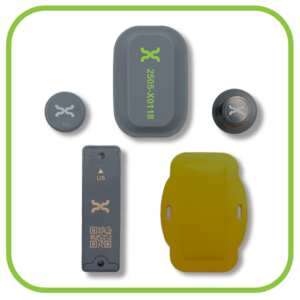
Xerafy is a pioneer in RFID for industrial applications, bringing to market several innovations that enable advanced identification and automation capabilities.
In addition to a complete range of field-proven RFID tags available off-the-shelf, Xerafy offers Custom RFID Tags services, covering everything from a personalization service bureau to custom-design engineering capabilities.