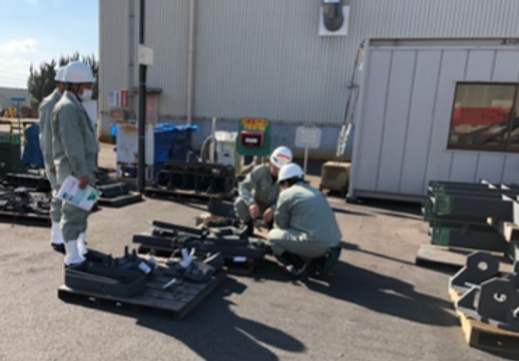
Japan’s Mitsui Engineering & Shipbuilding (MES) is a global engineering company that specializes in marine vessels, energy systems, and infrastructure. Its Oita Works facility produces material handling equipment including container cranes, gantry cranes, overhead cranes, jib cranes, ship cranes, and other machines.
As ports around the world invest and expand their facilities, demand for material handling equipment has increased. This surge in orders for MES’ cranes has put further pressure on the company to improve production efficiency.

Challenges: Handling 55,000 components
The cranes include tens of thousands of parts, many of which are produced at vendor factories.
In the past, it has been challenging for MES Oita Works to manage the large production inventory of components delivered to the facility daily from those vendors.
The parts had to be sorted according to job numbers by manually referencing an order sheet, engineering drawings, and other documents.
“A big crane typically consists of as many as 55,000 components, from small to large,” says Mr. Sotome, a manager of the Manufacturing Dept. of MES Oita Works. “We experienced difficulties managing the large number of metal components from different vendors and manually sorting and tracking those parts throughout the production process.”
Solution: Supplier-applied RFID labels linked to order data
MES selected the Metal Skin Mercury on-metal RFID labels for their performance on metal components and durability in outdoor conditions.
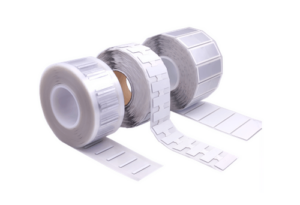
The Xerafy Metal Skin® series offers high-performance on-metal RFID labels: durable, flexible, and long-range for precise asset and inventory management.
The award-winning labeling solutions have been co-developed with Fortune 1000 companies to deliver the ultimate labeling solutions for high-value items.
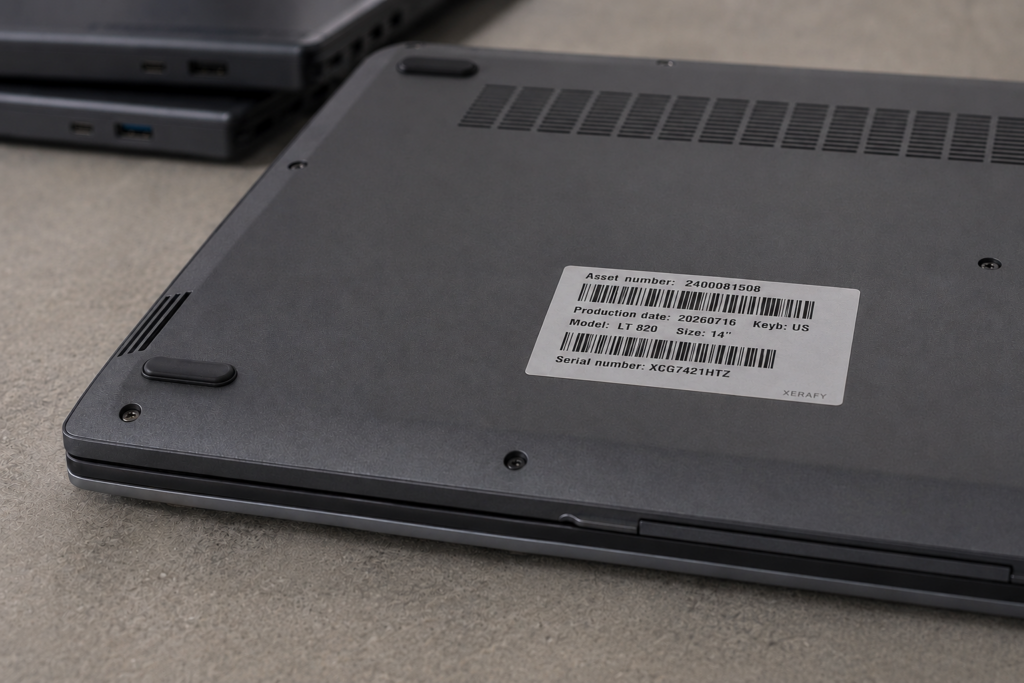
The selected labels could be printed using standard RFID printers and used on metallic and non-metallic surfaces. Custom-printed information also supported visual identification at process steps where electronic data access might be unavailable.
Labels were associated with order data and supplied to vendors when orders were placed. Vendors applied the labels to parts and components before delivery to Oita Works. Each vendor received a new order sheet and corresponding labels when delivering completed components.

Associating each label with its order before shipment gave receiving teams an identified component to work with on arrival. That association supported acceptance and delivery to the appropriate production site.
Results: Faster component acceptance and delivery to production
Before RFID was introduced, workers at each production site went to the stockyard to check whether required components had arrived and collect them if available. Those checks took time away from production.
RFID reduced the time needed to accept components from vendors and improved inventory management accuracy. Receiving staff could provide more timely delivery to production sites by checking production progress.
To evaluate a similar workflow, define where components will be read, which order and inventory records must be updated, and how receiving information will reach production teams.
“MES is always looking for ways to improve productivity and streamline processes” said Mr. Sotome of MES. “Timely delivery service to production sites requires integration with real-time production data. The system, which started out as a way to simply improve the efficiency of components acceptance, is now showing us how the Oita Works can effectively leverage the Internet of Things.”
Xerafy is a pioneer in Industrial RFID, bringing to market several innovations that enable advanced industrial identification and automation capabilities.
In addition to a complete range of field-proven RFID tags available off-the-shelf, Xerafy offers Custom RFID Tags services, covering everything from a personalization service bureau to custom-design engineering capabilities.